





Idioms And Phrasal Verbs IntermediateRuth Gairns Stuart Redman Introduction ……………………………………………………………………………….. 5 Abbreviations ………………………………………………………………………………… 7 Introduction to idioms and phrasal verbs1 What are idioms? …………………………………………………………………. 8 2 Types of idiom ……………………………………………………………………… 10 3 Finding idioms in a dictionary ……………………………………………….. 12 4 The grammar of phrasal verbs ……………………………………………….. 14 5 Core meanings 1 …………………………………………………………………… 16 6 Core meanings 2 …………………………………………………………………… 18 7 Different meanings of phrasal verbs ……………………………………….. 20 Review ………………………………………………………………………………………….. 22 Thinking, learning, and knowledge8 I can follow classroom language …………………………………………….. 26 9 I can talk about learning ……………………………………………………….. 28 10 I can talk about exams …………………………………………………………… 30 11 I can talk about ability and progress …………………………………………. 32 12 I can talk about thought processes ……………………………………………. 34 13 I can talk about knowledge and skills ……………………………………….. 35 Review ………………………………………………………………………………………….. 36 Communicating with people14 I can talk about getting in touch …………………………………………….. 39 15 I can describe ways of saying things …………………………………………. 40 16 I can talk about phoning …………………………………………………………. 41 17 I can use short spoken phrases …………………………………………………. 42 18 I can use phrases with say, tell, and see ………………………………… 44 19 I can use common spoken responses …………………………………………. 46 20 I can understand and leave messages ……………………………………….. 48 21 I can say what I think ……………………………………………………………. 50 22 I can talk about jokes that go wrong …………………………………………. 52 Review ………………………………………………………………………………………….. 54 People and relationships23 I can describe actions ……………………………………………………………… 58 24 I can talk about my family ……………………………………………………….. 60 25 I can talk about different generations …………………………………………. 62 26 I can talk about neighbours ………………………………………………………. 64 27 I can describe my feelings ………………………………………………………… 66 28 I can describe romantic relationships …………………………………………. 68 29 I can describe annoying habits ………………………………………………….. 70 30 I can talk about astrology …………………………………………………………. 72 Review ………………………………………………………………………………………….. 74 Everyday topics31 I can describe the weather ………………………………………………………. 78 32 I can talk about sleep ……………………………………………………………… 79 33 I can talk about spending and saving …………………………………………. 80 34 I can talk about diets and cooking …………………………………………….. 82 35 I can understand crime reporting ………………………………………………. 84 36 I can talk about work experience ……………………………………………….. 86 37 I can describe a small business …………………………………………………. 88 38 I can talk about shopping …………………………………………………………. 90 Review ………………………………………………………………………………………….. 91 Out and about39 I can describe social activities …………………………………………………. 94 40 I can describe outdoor activities ……………………………………………….. 96 41 I can talk about holidays …………………………………………………………. 98 42 I can talk about team sports …………………………………………………… 100 43 I can talk about situations on the road ………………………………………. 102 Review ………………………………………………………………………………………… 104 Concepts44 I can say what I want or need …………………………………………………. 107 45 I can discuss plans and arrangements ………………………………………. 108 46 I can talk about likes and interests ………………………………………….. 109 47 I can describe damage and repair ……………………………………………… 110 48 I can say how things begin and end …………………………………………. 112 49 I can talk about time ……………………………………………………………… 114 50 I can talk about numbers ……………………………………………………….. 116 51 I can talk about problems and solutions ……………………………………. 118 52 I can give advice …………………………………………………………………… 120 Review ………………………………………………………………………………………… 121 Language53 I can use link phrases ……………………………………………………………. 125 54 I can use fixed phrases with two key words ……………………………….. 126 55 I can use prepositional phrases ……………………………………………….. 128 56 I can use phrasal verbs as commands ……………………………………….. 130 57 I can use verb-based idioms ……………………………………………………. 132 58 I can use key verbs: get ……………………………………………………… 134 59 I can use key verbs: take and look …………………………………. 136 60 I can use key verbs: come and go …………………………………… 138 Review ………………………………………………………………………………………… 140 AppendicesIdioms – some interesting histories ………………………………………………….. 144 Answer key …………………………………………………………………………………….. 145 Answer key to review units ……………………………………………………………….. 166 List of spotlight boxes ……………………………………………………………………… 175 Word list / Index ……………………………………………………………………………… 176 Key words ……………………………………………………………………………………… 187 |
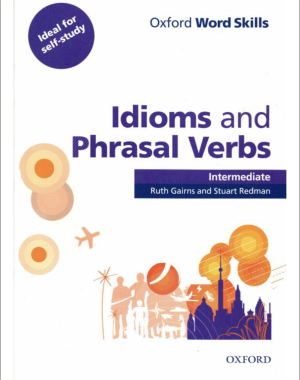
Cracking the Code of Natural English: A Review of Oxford Word Skills — Idioms and Phrasal Verbs
Introduction: Mastering the Most Challenging Pillar of English
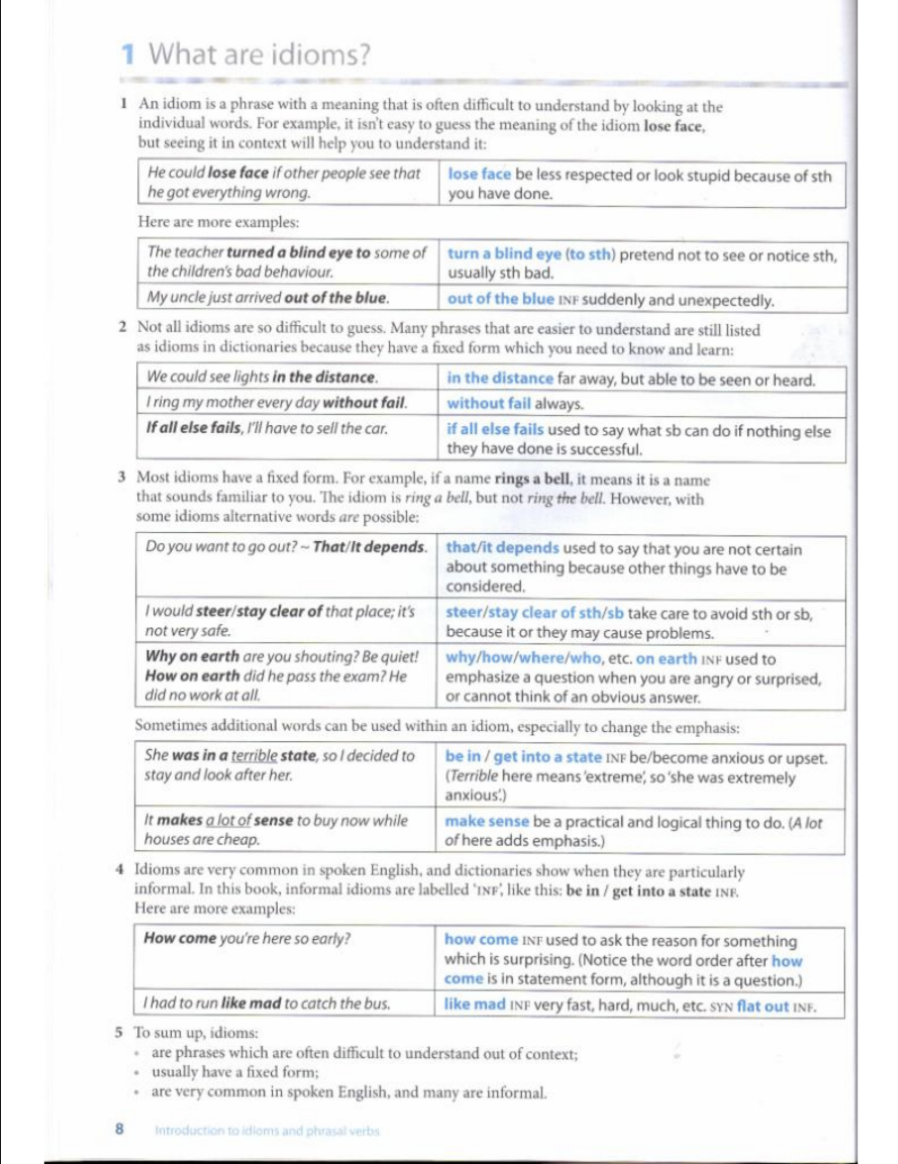
For many English learners, the plateau between “intermediate” and “fluent” is defined by two daunting obstacles: Idioms and Phrasal Verbs. You can have perfect grammar and a massive vocabulary, but if you don’t understand what it means to “get in touch” or “say what you think” using natural expressions, your English will always sound academic and stiff.
This book is a rigorous and thematic roadmapspecifically designed to help intermediate learners master these colorful, essential components of the language.
What Kind of Book Is This?
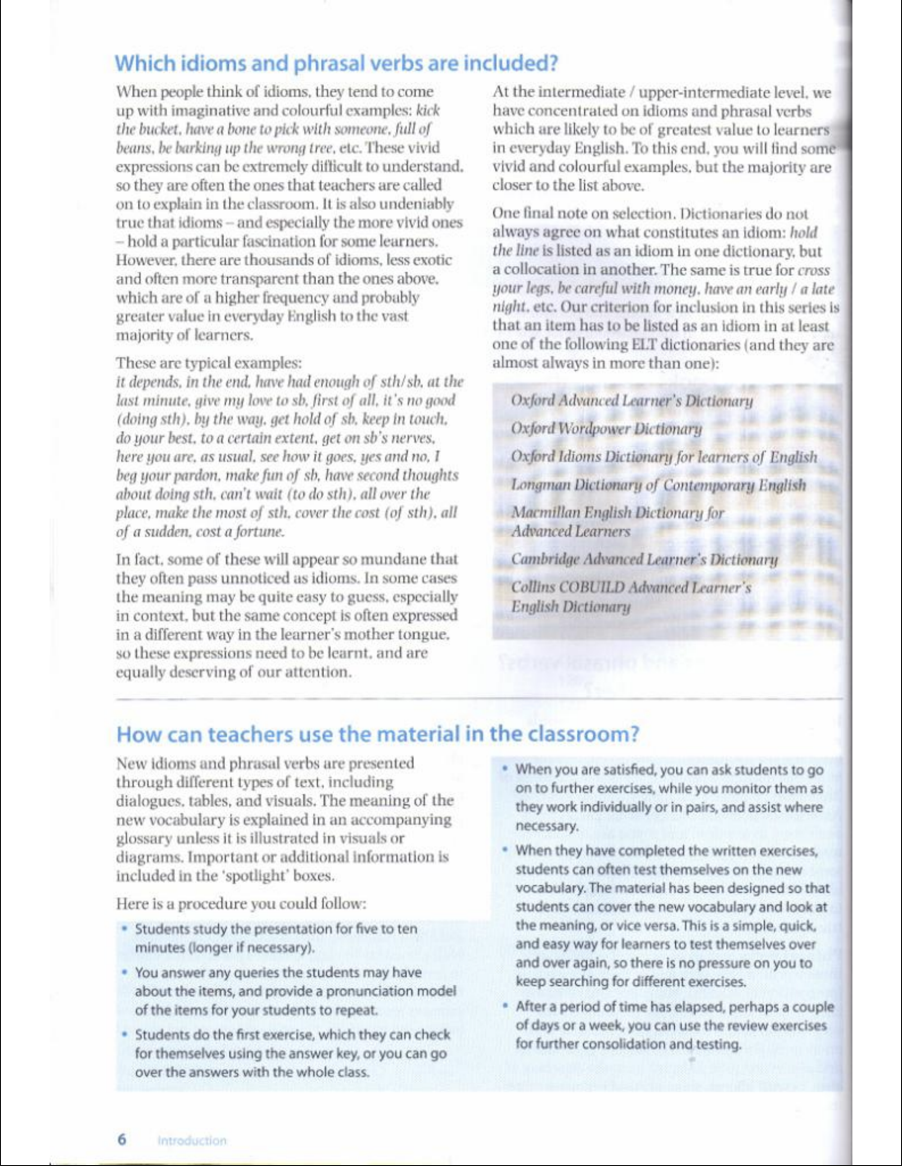
This is a high-intensity reference and practice manual focused exclusively on the idiomatic heart of English. As part of the award-winning Oxford Word Skills series, it follows a highly effective “learn-by-doing” methodology.
Structured into 60 specialized units, it transitions from the foundational “Grammar of phrasal verbs” (Unit 4) to real-world applications in areas like “Communicating with people,” “People and relationships,” and “Everyday topics.”
Who Is the Ideal Reader?
- Intermediate Learners (B1-B2): Those who are tired of sounding like a textbook and want to start sounding like a native speaker.
- Exam Candidates: Students preparing for the TOEFL or IELTS who need a high-level command of idiomatic language to achieve top-tier speaking and writing scores.
- International Professionals: Individuals working in English-speaking environments who need to understand the “hidden” meaning behind office banter and social interactions.
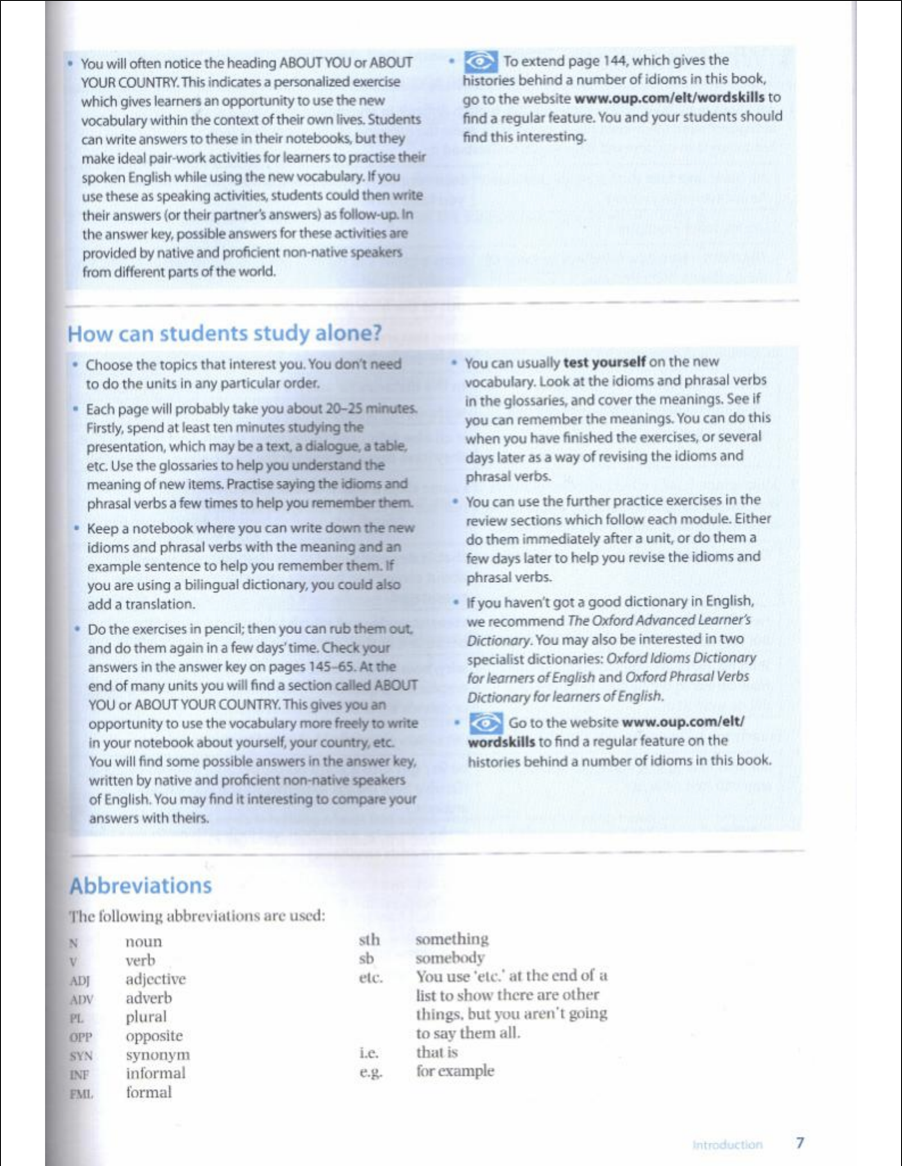
- Self-Study Enthusiasts: With its built-in “Review” units and comprehensive “Answer Keys,” this book is the perfect tool for autonomous progress.
Detailed Editorial Review: Why This Book is a Game-Changer
1. Structural Clarity and “Core Meanings”
One of the standout features of this guide is how it deconstructs the logic of phrasal verbs. Units 5 and 6 focus on Core Meanings, helping the student understand the “DNA” of the verb before adding the particle. This approach prevents the feeling of overwhelming memorization and replaces it with intuitive understanding.
2. The “I Can” Practical Philosophy
The book utilizes the “Outcome-Based” approach. Every unit is titled with a practical ability, such as “I can talk about different generations” or “I can give advice.” This ensures that the student is not just learning abstract lists, but building a functional toolkit for specific life situations. It provides an immediate sense of accomplishment and ROI (Return on Investment) for every study session.
3. Mastering the Nuance of Social Interaction
The sections on Communicating with People (Units 14-22) are particularly valuable. They cover the “gray areas” of language—how to phoning, how to leave messages, and even how to talk about “jokes that go wrong.” This builds the “social intelligence” required to navigate real-world English without awkwardness.
4. Deep Context and Cultural History
What makes this book unique is the Idioms – some interesting histories section (page 144). By learning the origin of an expression, the learner builds a stronger mental connection to it, making it much easier to remember. Paired with the strategic Review Units, the book ensures that these tricky expressions move from short-term memory to permanent usage.
The Final Verdict: Why You Must Read It
You should read this book because idioms and phrasal verbs are the soul of the language. Without them, you are always an outsider looking in. This guide provides the “X-ray vision” to decode how native speakers actually think and the tools to respond with natural, effortless precision.
Final Conclusion: Rigorous, logically organized, and profoundly practical, this is the gold standard for mastering English idioms. It transforms the most frustrating part of the language into a series of masterable, exciting chapters. If you are serious about achieving true fluency, this is an indispensable investment.