
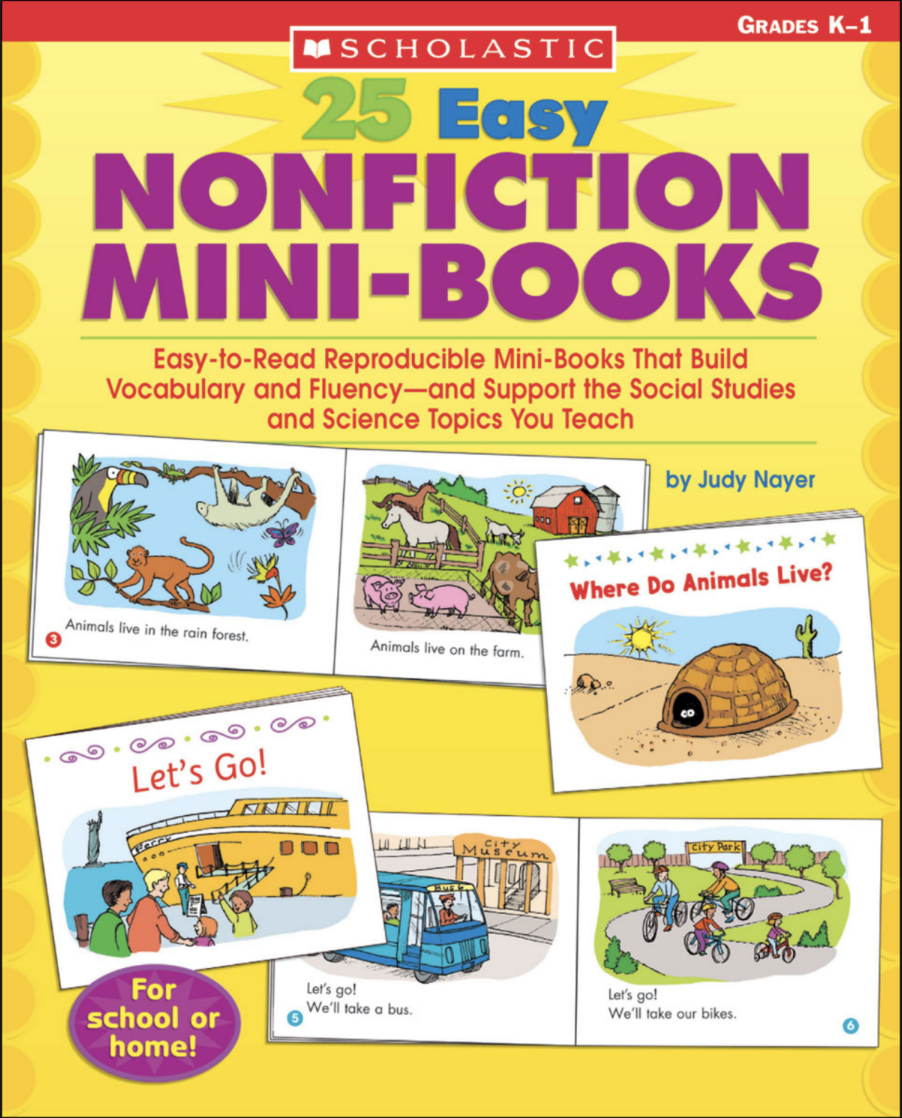





25 Easy Nonfiction Mini – Books Grades K-1Judy Nayer Introduction …………………………………… 4How to Make and Use the Mini-Books ………………. 5Connections to the Standards ……………………. 5Classroom Activities …………………………… 6Science Mini-BooksWhere Do Animals Live? …………………………. 15How a Seed Grows ………………………………. 17Everything Changes …………………………….. 19Who Is Hiding? ………………………………… 21Water, Water, Everywhere! ………………………. 23All Kinds of Weather …………………………… 25My Five Senses ………………………………… 27Animals Need Trees …………………………….. 29Social Studies Mini-BooksWhat We Like ………………………………….. 31Friends ………………………………………. 33My Family …………………………………….. 35What Do Families Do? …………………………… 37When I Grow Up ………………………………… 39What’s in a Community? …………………………. 41Let’s Go! …………………………………….. 43Long Ago and Today …………………………….. 45America the Beautiful ………………………….. 47Math Mini-BooksShape Walk ……………………………………. 49Patterns ……………………………………… 51Let’s Count! ………………………………….. 53How Many? …………………………………….. 55I Spy ………………………………………… 57Which Is Bigger? ………………………………. 59Adding Fun ……………………………………. 61It’s Time! ……………………………………. 63 |
The Integrated Explorer: A Comprehensive Review of the Cross-Curricular Mini-Book Collection
Introduction: Cultivating Curiosity Across the Curriculum
In the formative years of early childhood education, the most impactful lessons are those that bridge multiple subjects through hands-on engagement. “The Integrated Explorer” is a masterfully designed pedagogical roadmap specifically engineered to guide young learners through the foundational concepts of Science, Social Studies, and Math.
This collection moves beyond simple worksheets, transforming early academic discovery into a series of masterable, high-interest mini-books. By empowering students to create and own their learning materials, this guide provides the “X-ray vision” needed to understand the interconnected world around them.
What Kind of Book Is This?
This is a Comprehensive Multi-Disciplinary Resource and Activity Manual for early elementary education (Grades Pre-K–1). It functions as a structured reference guide that integrates literacy with core content areas. The book follows a logical, tripartite architecture—Science, Social Studies, and Math—offering a library of “Mini-Books” that children can assemble and keep.
This approach ensures that students develop “World Knowledge” and “Mathematical Logic” simultaneously while practicing essential language arts skills.
Who Is the Ideal Reader?
- Early Elementary Educators: Teachers looking for a “plug-and-play” curriculum that aligns with national Language Arts standards while covering essential thematic units.
- Homeschooling Parents: Those seeking an authoritative, evidence-based framework to provide a well-rounded education in a hands-on, creative format.
- Literacy and Math Tutors: Professionals who need high-engagement tools to help students visualize abstract concepts like “Patterns”, “Communities”, or “The Senses”.
- School Librarians: Individuals looking for a standardized system to reinforce classroom lessons through interactive, take-home resources.
Detailed Editorial Review: Why This Book Is a Game-Changer
1. The Power of Integrated “Mini-Book” Learning
The standout feature of this manual is its Kinesthetic Scaffolding. By having students participate in the making of their own “Science Mini-Books” or “Math Mini-Books”, the curriculum creates a sense of ownership over the information. This tactile connection is scientifically proven to improve retention and engagement, making complex topics like “How a Seed Grows” or “Long Ago and Today” feel accessible and personal.
2. Strategic Cross-Curricular Architecture
Unlike generic activity books, this guide excels in Thematic Versatility. It recognizes that a child’s brain doesn’t learn in silos. By exploring “Shapes” in a Math context and then “America the Beautiful” in a Social Studies context, the manual provides a definitive solution to the “disconnect” in early education. It shows students how the logic of numbers and the history of their community are all parts of the same big story.
3. Standards-Aligned Professionalism
The inclusion of “Connections to the Language Arts Standards” (Page 5) is a vital pedagogical asset. It ensures that while children are learning about “Weather” or “Adding Fun”, they are also meeting required educational benchmarks in reading and writing. This provides educators with the necessary accountability and “X-ray vision” to track progress within a standardized framework.
4. Practical Classroom and Home Implementation
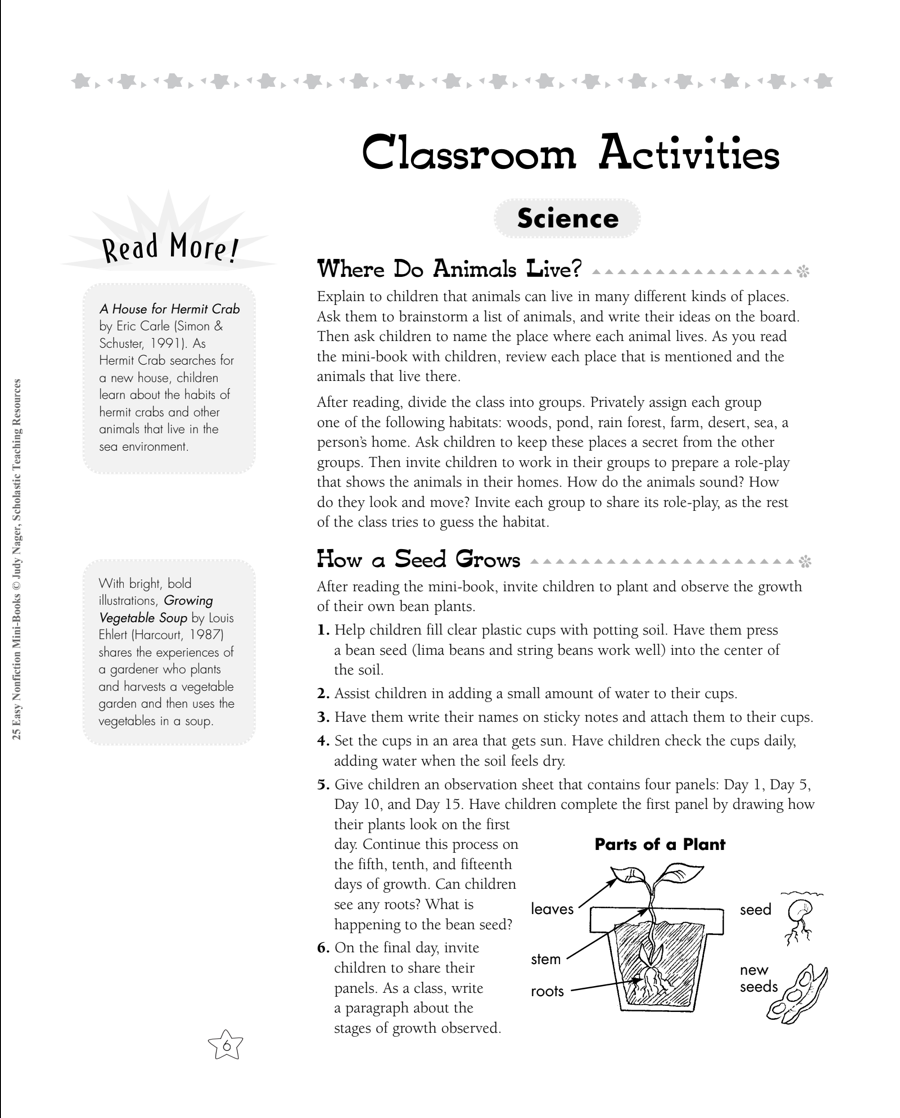
The curriculum is designed with Functional Flexibility in mind. The “Classroom Activities” section (Page 6) and the detailed instructions on “How to Make and Use the Mini-Books” make this an invaluable tool for both veteran teachers and parents new to homeschooling. It removes the guesswork from early education, providing a clear path from “I Spy” counting games to understanding “What Do Families Do?”.
The Final Verdict: Why You Must Read It
You should implement this book because integration is the foundation of a confident mind. For a young learner, the world is a fascinating puzzle; this guide provides the pieces. Every mini-book completed is a boost in confidence that ensures the journey toward literacy and numerical fluency is meaningful, measurable, and joyful.
Final Conclusion: Rigorous, logically organized, and profoundly practical, this is the gold standard for cross-curricular early planning. It celebrates the joy of discovery while maintaining a high standard of academic excellence. If you are serious about building a literate, curious, and confident student, this collection is an indispensable investment.