
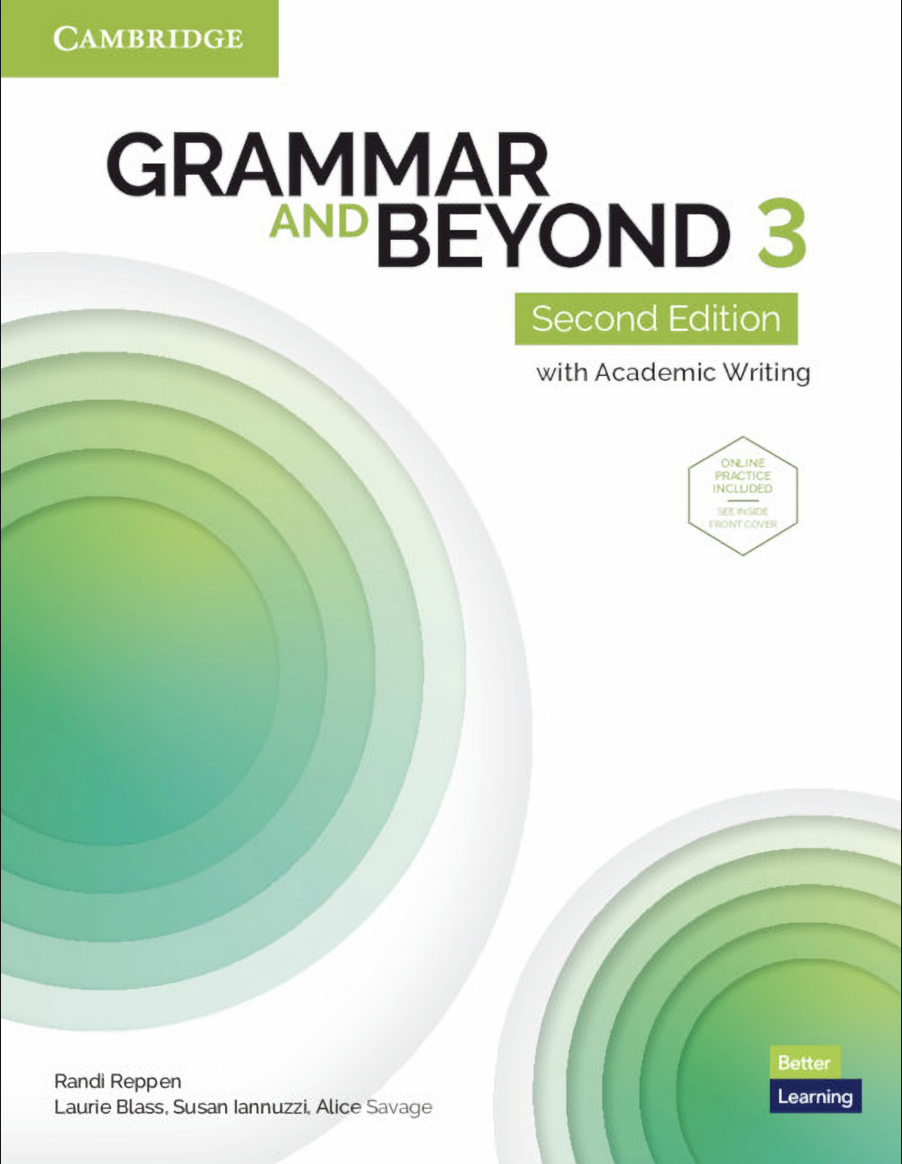
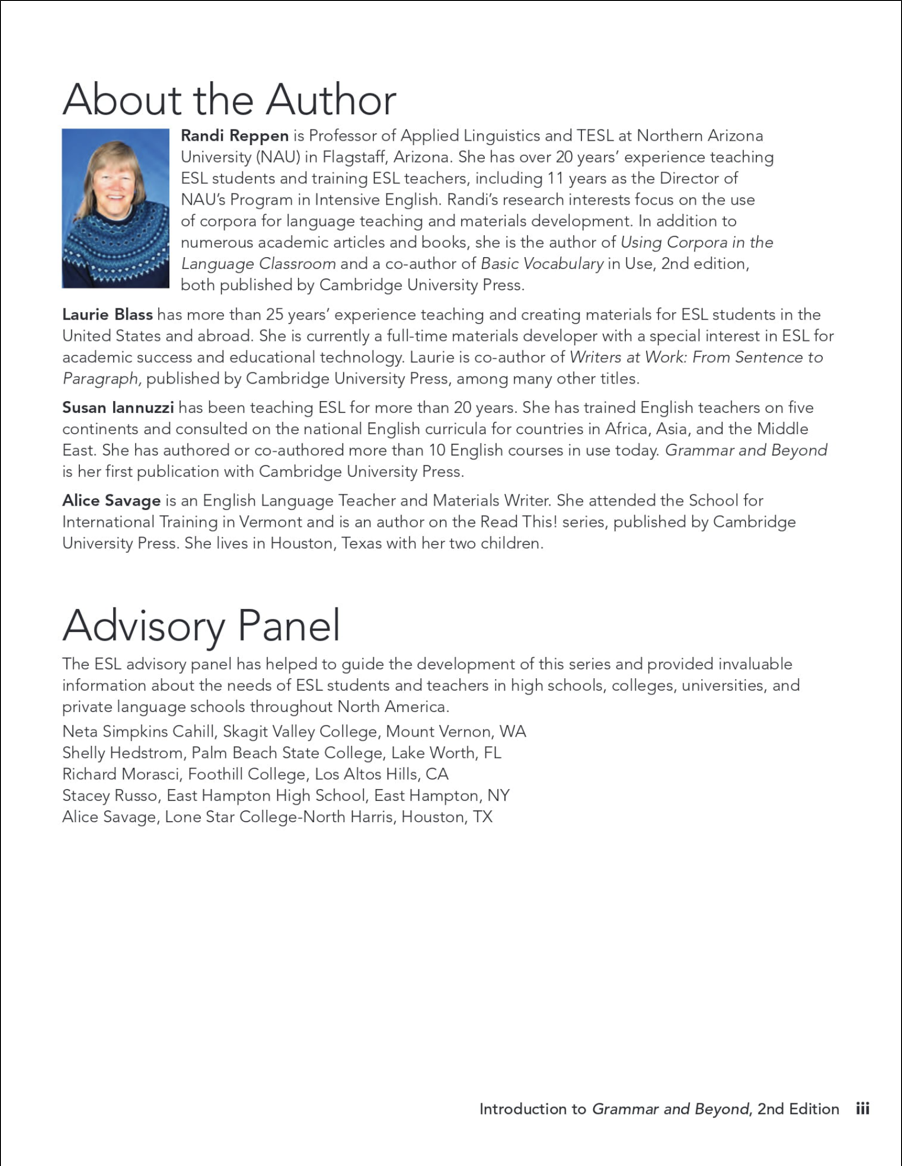
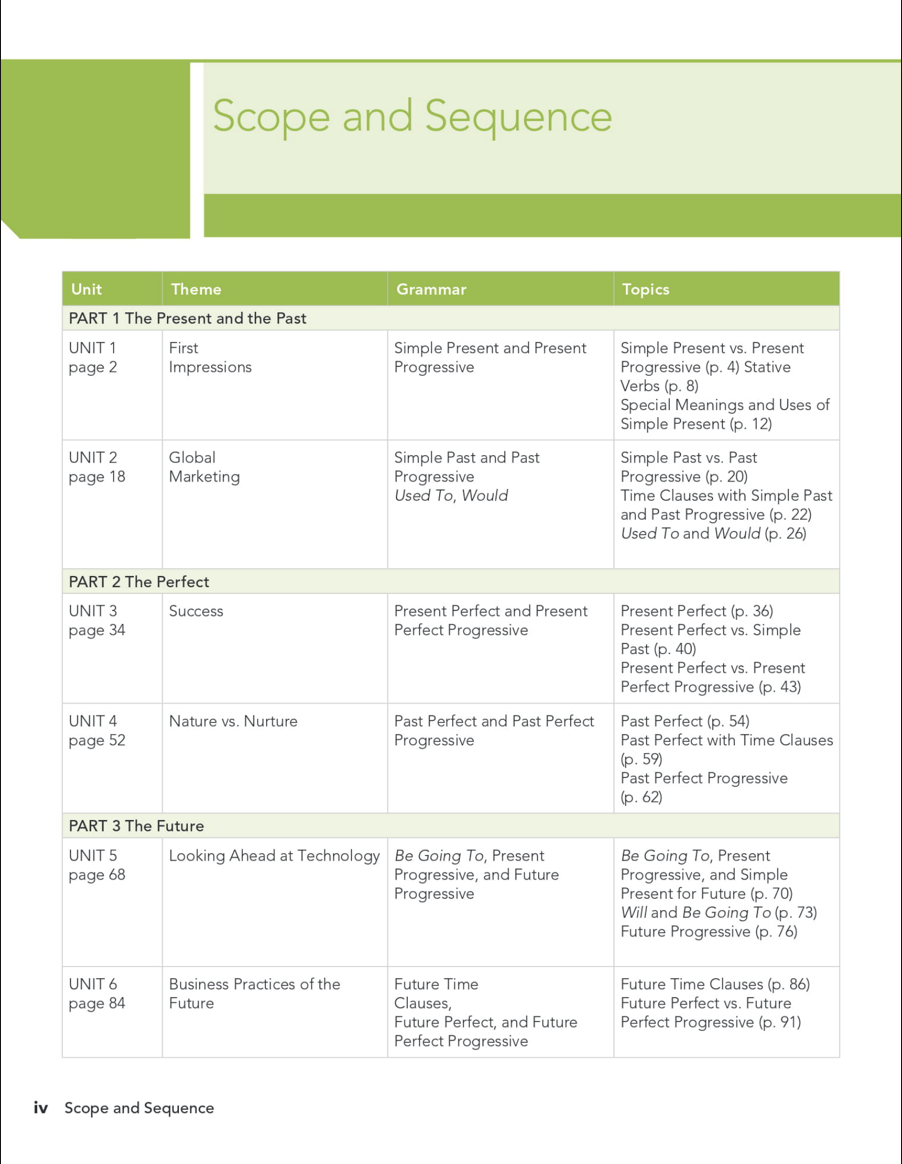
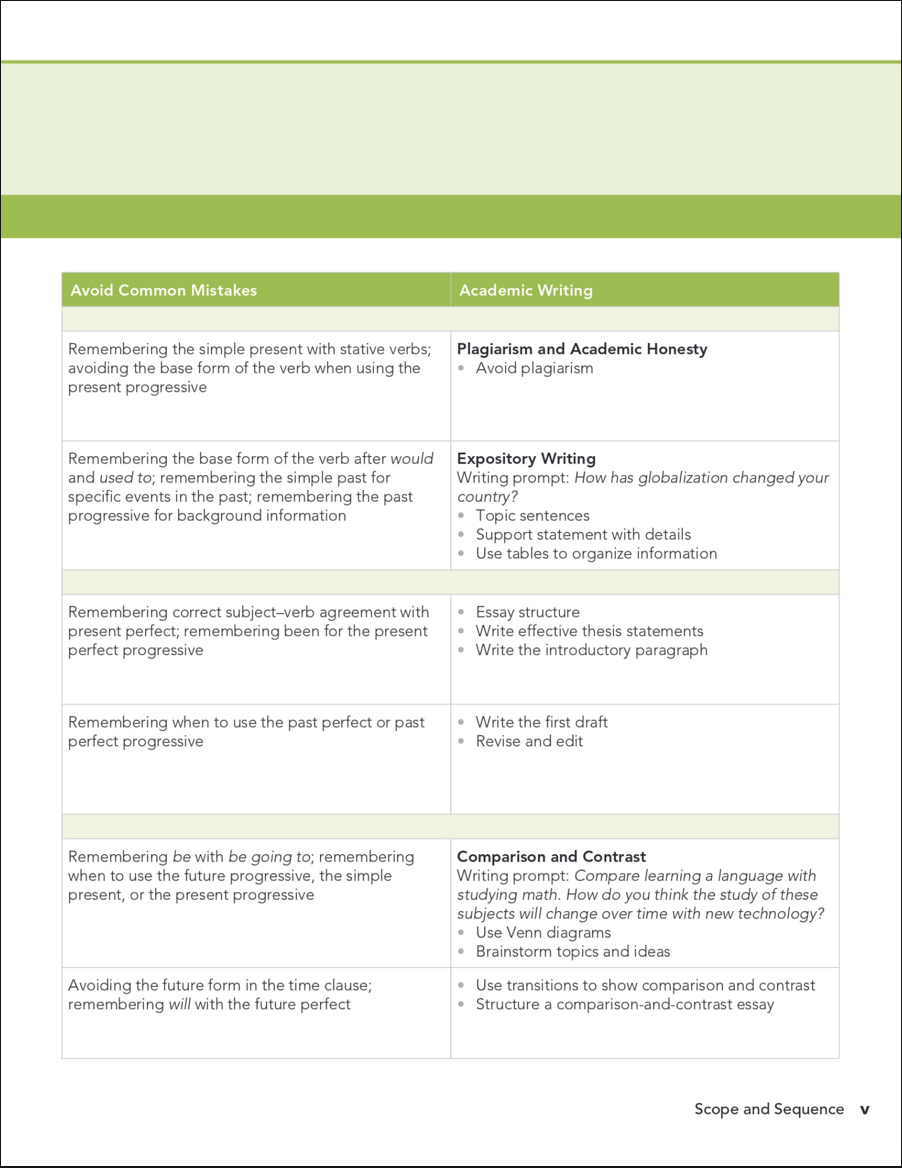
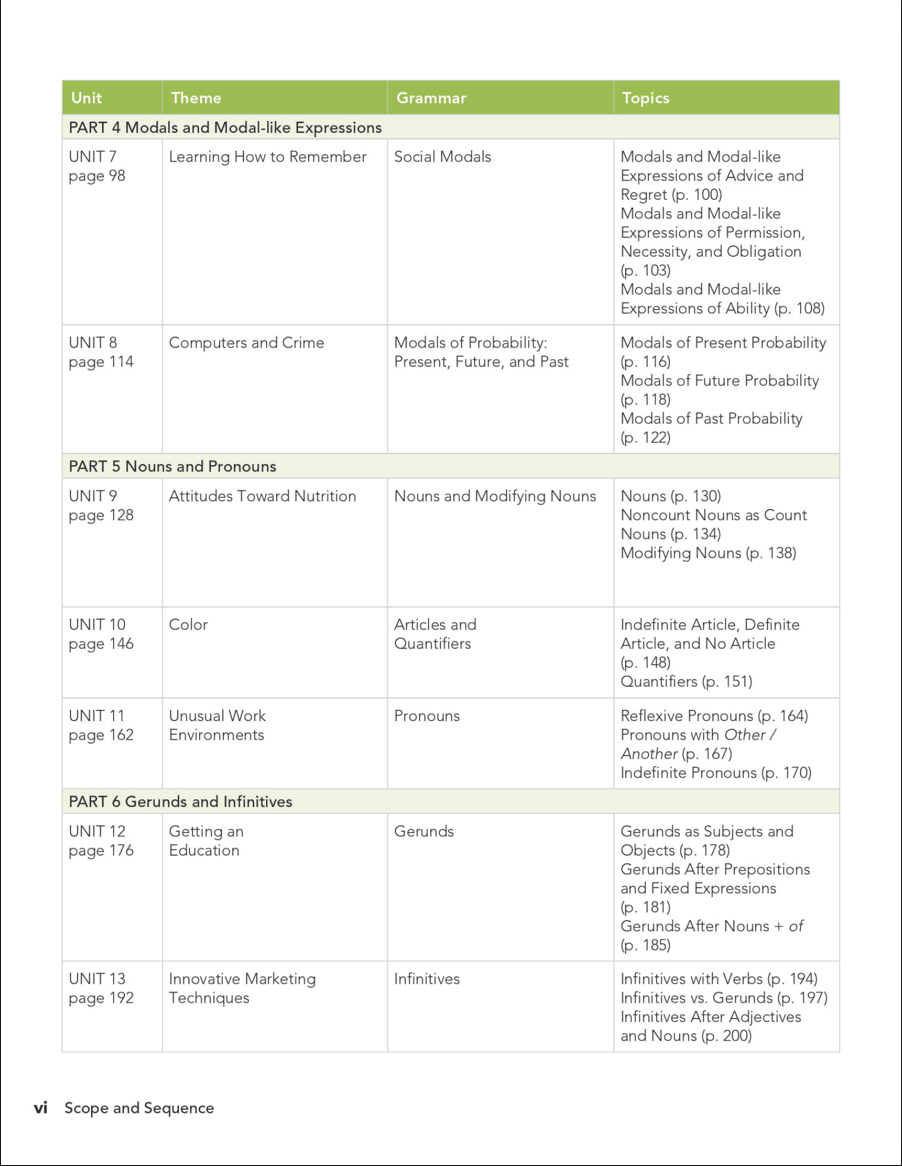
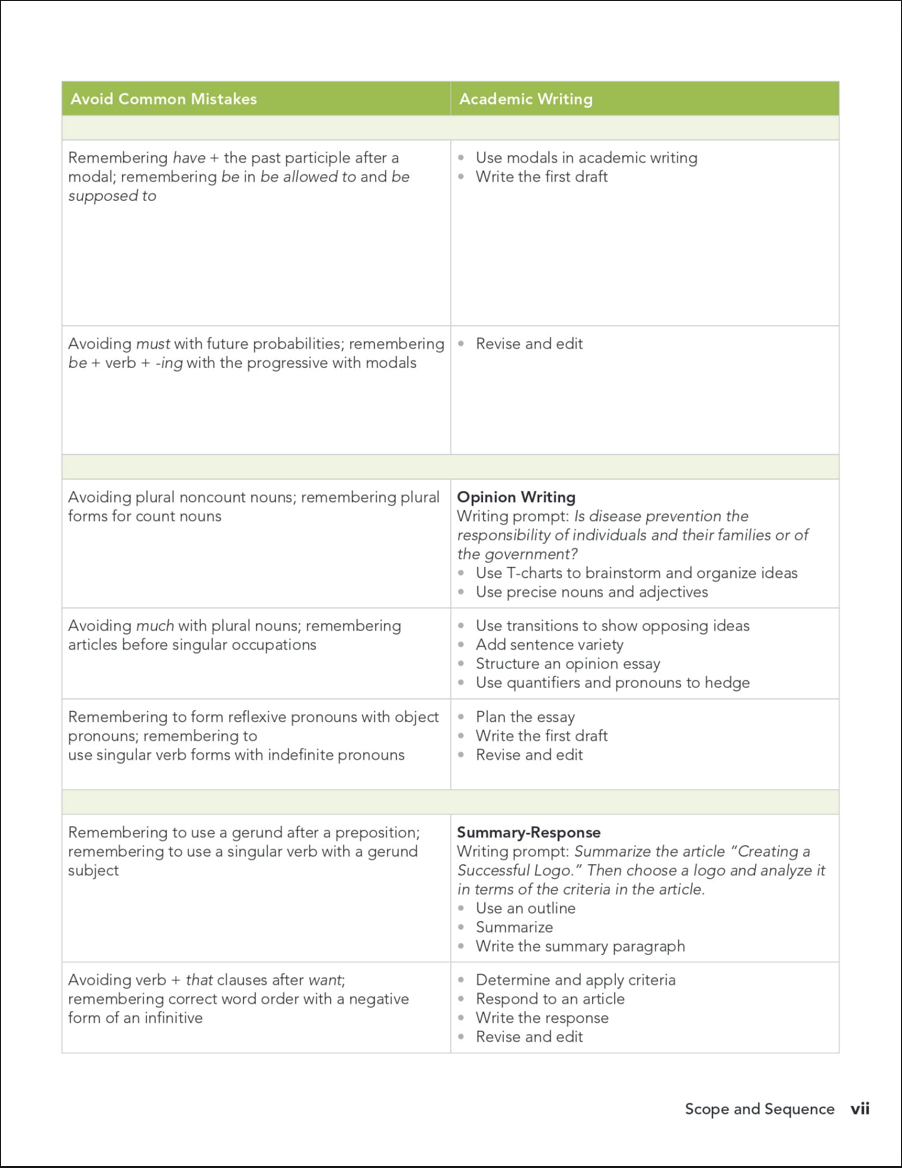
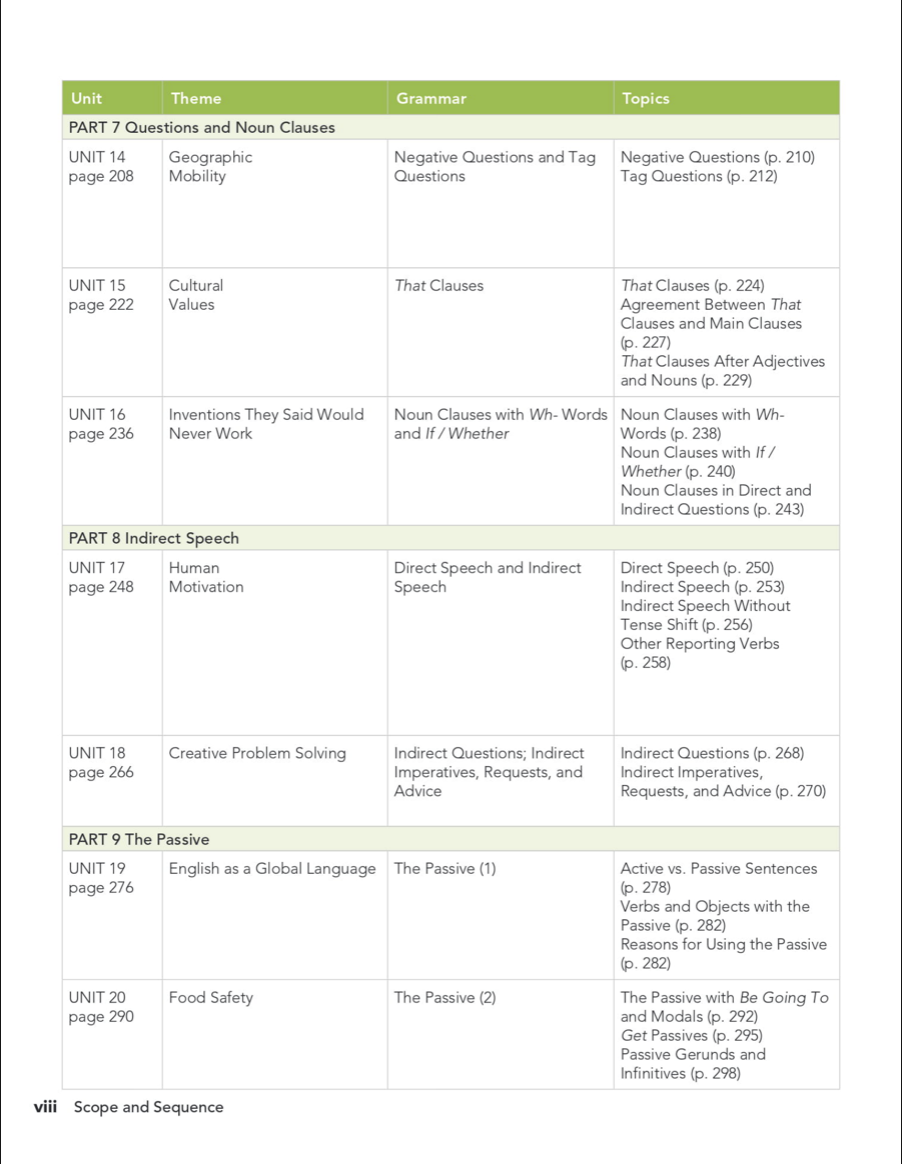
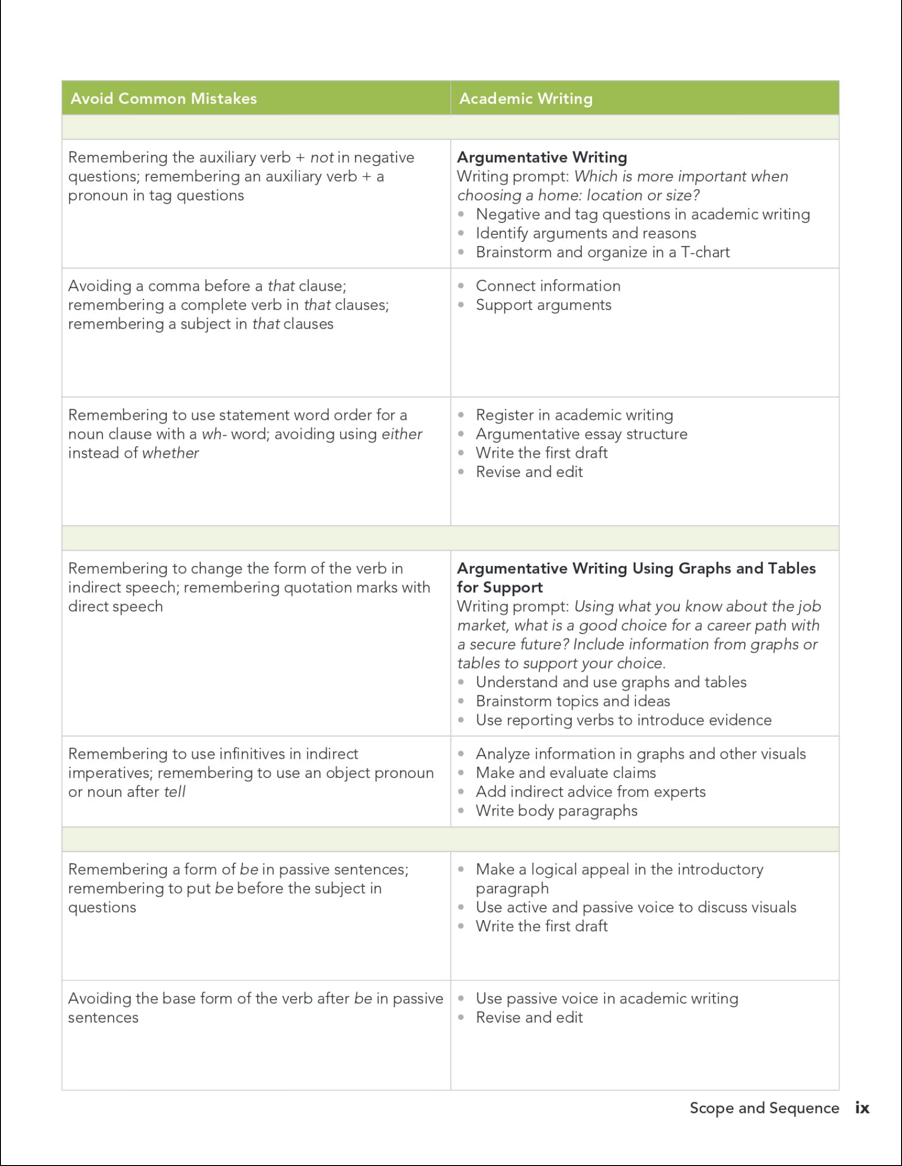
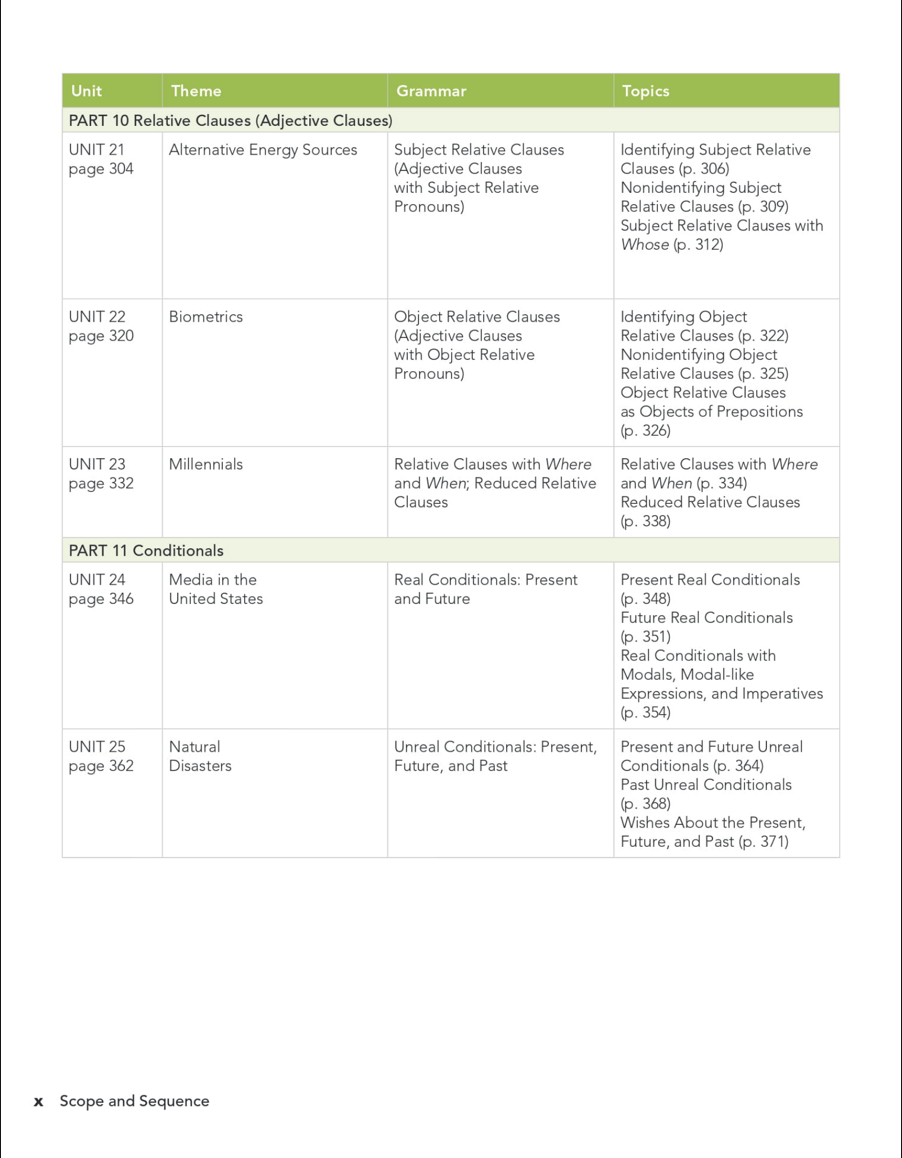
Grammar And Beyond 3Rendi Reppen Laurie Blass Susan Lannuzzi Alice Savage PART 1: The Present and the PastUNIT 1 First Impressions page 2Grammar: Simple Present and Present ProgressiveTopics: Stative Verbs, Special Meanings and UsesUNIT 2 Global Marketing page 18Grammar: Simple Past and Past Progressive, Used To, WouldTopics: Time Clauses with Simple Past, Used To and WouldPART 2: The PerfectUNIT 3 Success page 34Grammar: Present Perfect and Present Perfect ProgressiveTopics: Present Perfect vs. Simple PastUNIT 4 Nature vs. Nurture page 52Grammar: Past Perfect and Past Perfect ProgressiveTopics: Past Perfect with Time ClausesPART 3: The FutureUNIT 5 Looking Ahead at Technology page 68Grammar: Be Going To, Present Progressive, and Future ProgressiveTopics: Will and Be Going To, Future ProgressiveUNIT 6 Business Practices of the Future page 84Grammar: Future Time Clauses, Future Perfect, and Future Perfect ProgressiveTopics: Future Time Clauses, Future Perfect vs. ProgressivePART 4: Modals and Modal-like ExpressionsUNIT 7 Learning How to Remember page 98Grammar: Social ModalsTopics: Advice, Regret, Permission, Necessity, Obligation, AbilityUNIT 8 Computers and Crime page 114Grammar: Modals of Probability: Present, Future, and PastPART 5: Nouns and PronounsUNIT 9 Attitudes Toward Nutrition page 128Grammar: Nouns and Modifying NounsTopics: Noncount Nouns as Count NounsUNIT 10 Color page 146Grammar: Articles and QuantifiersTopics: Indefinite, Definite, and No ArticleUNIT 11 Unusual Work Environments page 162Grammar: PronounsTopics: Reflexive Pronouns, Pronouns with Other/AnotherPART 6: Gerunds and InfinitivesUNIT 12 Getting an Education page 176Grammar: GerundsTopics: Gerunds as Subjects and Objects, After PrepositionsUNIT 13 Innovative Marketing Techniques page 192Grammar: InfinitivesTopics: Infinitives vs. Gerunds, After Adjectives and NounsPART 7: Questions and Noun ClausesUNIT 14 Geographic Mobility page 208Grammar: Negative Questions and Tag QuestionsUNIT 15 Cultural Values page 222Grammar: That ClausesTopics: Agreement Between That Clauses and Main ClausesUNIT 16 Inventions They Said Would Never Work page 236Grammar: Noun Clauses with Wh- Words and If / WhetherPART 8: Indirect SpeechUNIT 17 Human Motivation page 248Grammar: Direct Speech and Indirect SpeechTopics: Indirect Speech Without Tense ShiftUNIT 18 Creative Problem Solving page 266Grammar: Indirect Questions; Indirect Imperatives, Requests, and AdvicePART 9: The PassiveUNIT 19 English as a Global Language page 276Grammar: The Passive (1)Topics: Active vs. Passive, Reasons for Using the PassiveUNIT 20 Food Safety page 290Grammar: The Passive (2)Topics: The Passive with Be Going To and Modals, Passive GerundsPART 10: Relative Clauses (Adjective Clauses)UNIT 21 Alternative Energy Sources page 304Grammar: Subject Relative ClausesTopics: Identifying vs. Nonidentifying Subject Relative ClausesUNIT 22 Biometrics page 320Grammar: Object Relative ClausesTopics: Object Relative Clauses as Objects of PrepositionsUNIT 23 Millennials page 332Grammar: Relative Clauses with Where and When; Reduced Relative ClausesPART 11: ConditionalsUNIT 24 Media in the United States page 346Grammar: Real Conditionals: Present and FutureUNIT 25 Natural Disasters page 362Grammar: Unreal Conditionals: Present, Future, and PastTopics: Wishes About the Present, Future, and PastPART 12: Connecting IdeasUNIT 26 Globalization of Food page 378Grammar: ConjunctionsTopics: Coordinating Conjunctions, Reducing SentencesUNIT 27 Consumerism page 396Grammar: Adverb Clauses and PhrasesTopics: Subordinators, Reducing Adverb ClausesUNIT 28 Technology in Entertainment page 408Grammar: Connecting Information with Prepositions and Transitions |
The Linguistic Architect: A Systematic Review of the Advanced Academic Grammar and Beyond Series
Introduction: Engineering Mastery in Global Communication
In the journey toward linguistic authority, the most significant developmental threshold is the transition from “functional English” to nuanced academic and professional mastery. This series is a masterfully designed pedagogical roadmap specifically engineered to guide advanced students through this threshold.
It moves beyond standard rules, transforming the study of American English into a series of masterable milestones that bridge the gap between technical accuracy and high-level rhetorical agency.
What Kind of Book Is This?
This is a Comprehensive Structural Reference and Thematic Context Curriculum for high-intermediate and advanced English learners. It functions as a modular command center—sequencing 28 strategic units across 12 parts—ensuring that students build a cohesive understanding of how English functions as the operating system for their professional, academic, and social lives.
The curriculum is unique in its “Thematic Integration”, where each grammar point is taught through high-interest, real-world topics.
Who Is the Ideal Reader?
- The Academic High-Achiever: University-level students who need absolute precision in reporting thoughts, utilizing the passive voice, and organizing complex relative clauses.
- The Global Professional: Individuals seeking an authoritative framework to master subtle nuances in marketing, business practices, and human motivation.
- Critical Thinkers: Learners who wish to explore modern societal issues—ranging from “Millennials” and “Biometrics” to “Natural Disasters”—while simultaneously refining their linguistic tools.
Detailed Editorial Review: Why This Book Is a Game-Changer
1. Strategic Intellectual Scaffolding
The standout feature of this manual is its Conceptual Sequencing. It understands that for advanced learners, clarity is found in the connection between form and meaning. By starting with foundational timeframes (“The Present and the Past”) and masterfully scaffolding up to complex “Connecting Ideas” and “Conditionals”, the book ensures that the student develops a surgical level of accuracy before advancing to abstract information organization.
2. Mastery of Contextualized Functional Literacy
Unlike generic workbooks, this guide excels in Thematic Accuracy. Sections on “Modals of Probability” and “Noun Clauses” are taught through the lens of “Computers and Crime” or “Cultural Values”. This provides the definitive solution to the “sophistication gap” often felt by non-native speakers, transforming dry rules into powerful tools for personal and intellectual agency.
3. The “Thematic-Grammar” Consolidation System
The curriculum is designed with Rhetorical Authority at its core. The final parts on “Relative Clauses”, “Conditionals”, and “Connecting Ideas” are brilliant pedagogical assets. These modules provide the definitive solution to the “robotic English” syndrome, allowing students to guide their audience’s attention with native-level sophistication and logical flow.
4. Cross-Curricular Intellectual Depth
The curriculum respects the power of “World Knowledge”. By integrating diverse themes—ranging from “Nature vs. Nurture” to “Globalization of Food”—the manual effectively doubles the educational impact of every study session. Students aren’t just học “grammar”; they are learning the mechanics of logical thought and modern science through the lens of a new language.
The Final Verdict: Why You Must Read It
Confidence is the foundation of authority. For an advanced learner, the English language is a journey of 28 strategic leaps toward total social and professional independence; this guide ensures that every one of those leaps is meaningful, measurable, and deeply rewarding. If you are serious about building a literate, curious, and globally confident voice at the highest level, this series is an indispensable investment.
Conclusion: Rigorous, logically organized, and profoundly practical, this is the gold standard for advanced communication instruction. It celebrates the joy of discovery while maintaining a high standard of academic excellence. This guide is your primary resource for achieving true communicative mastery.