
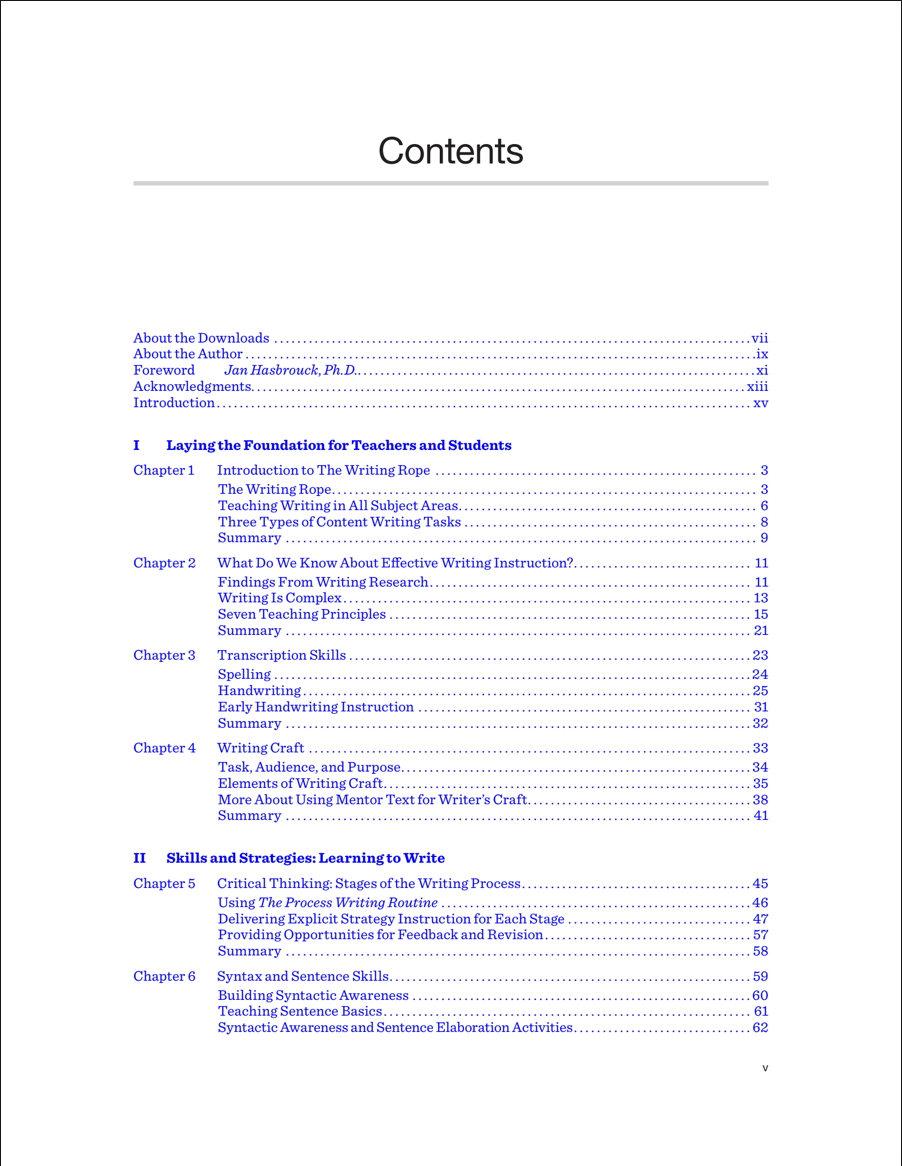
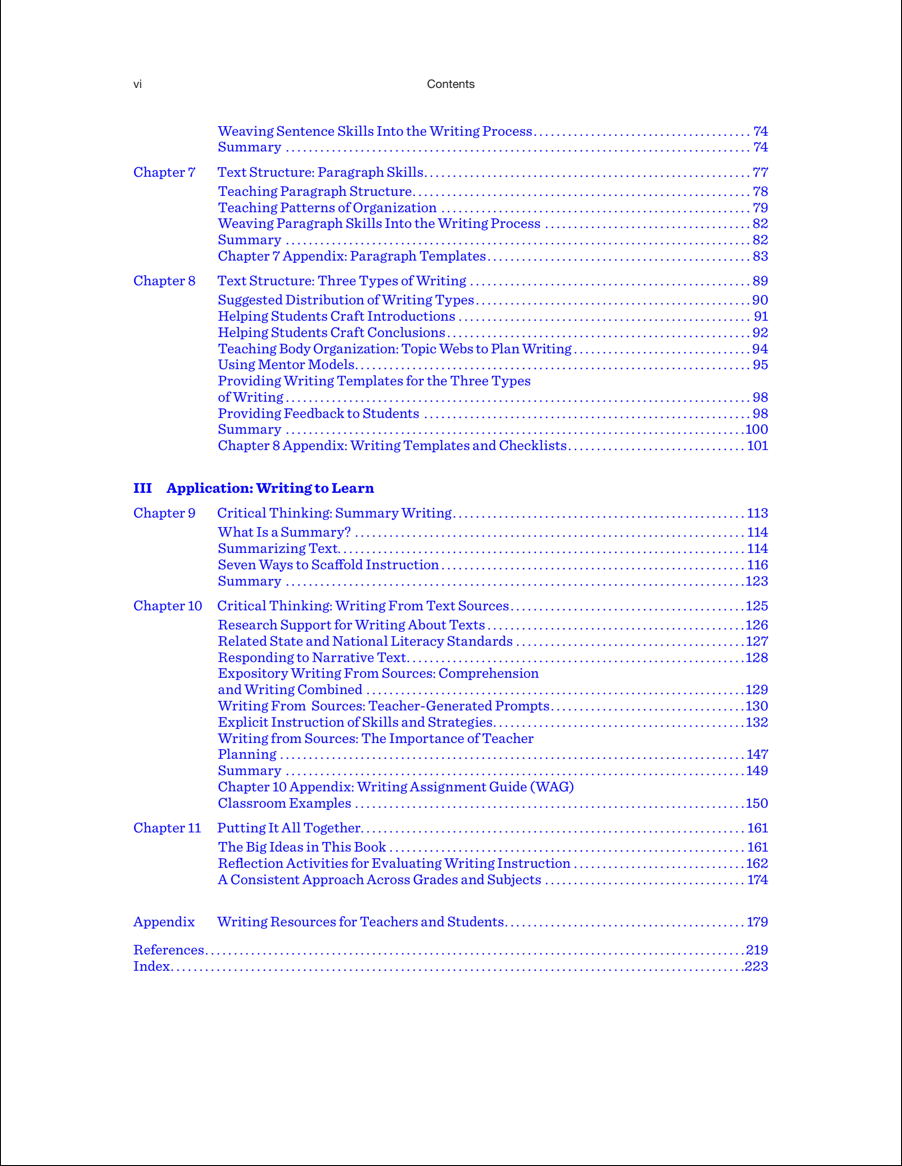
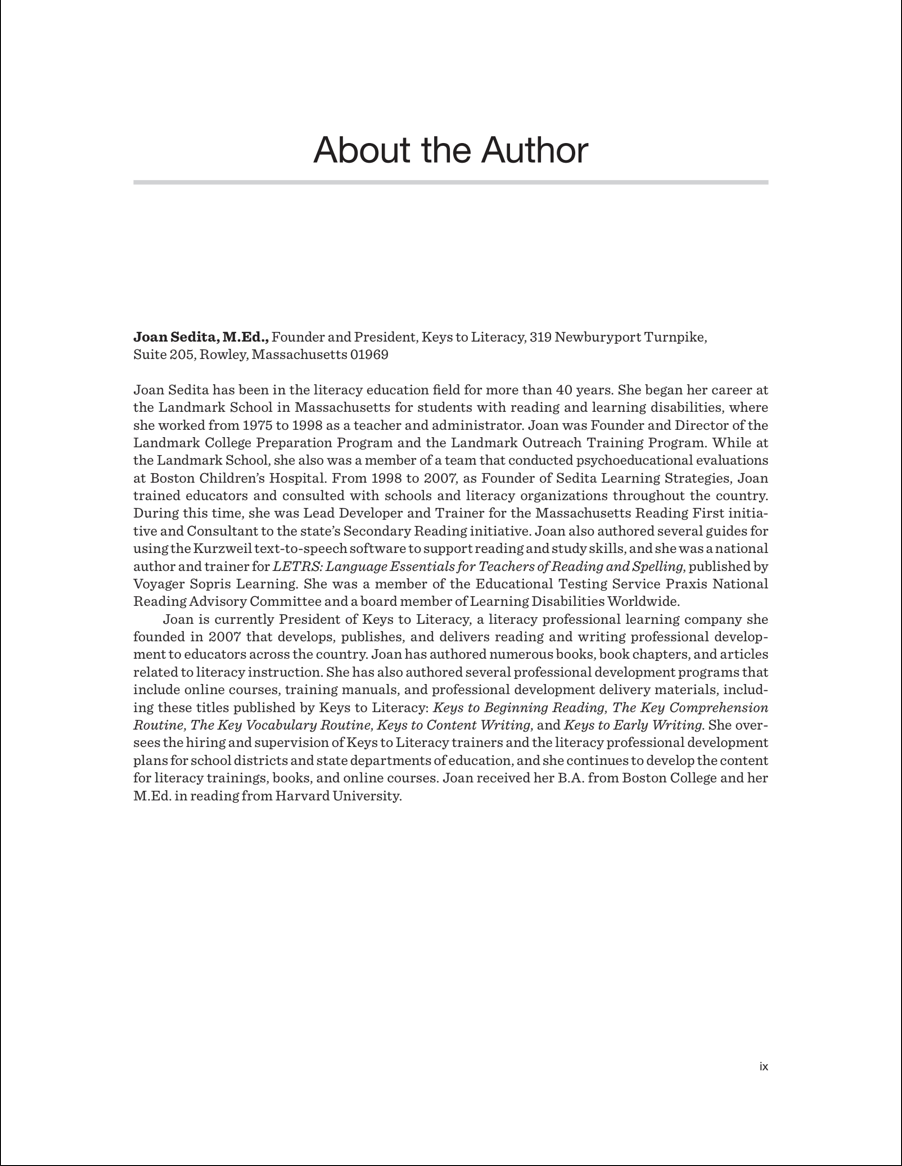
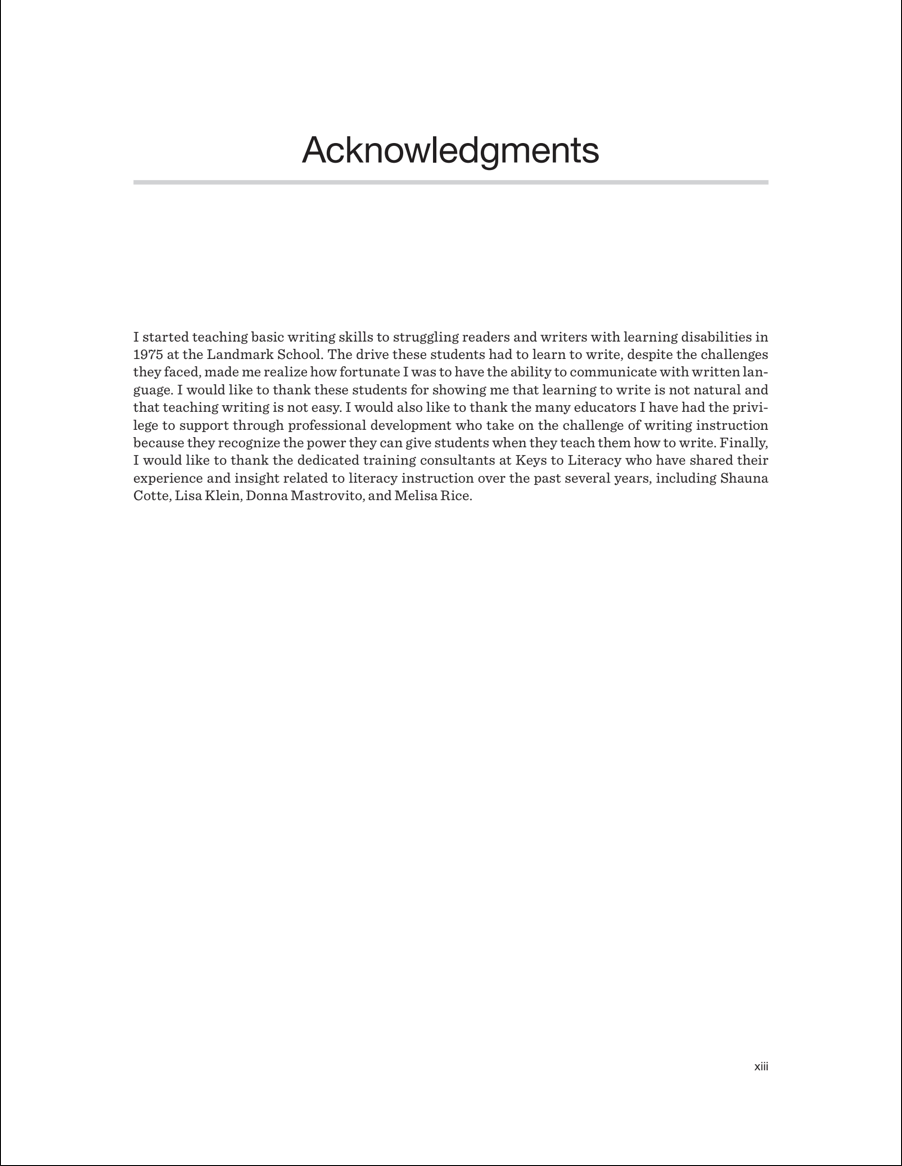
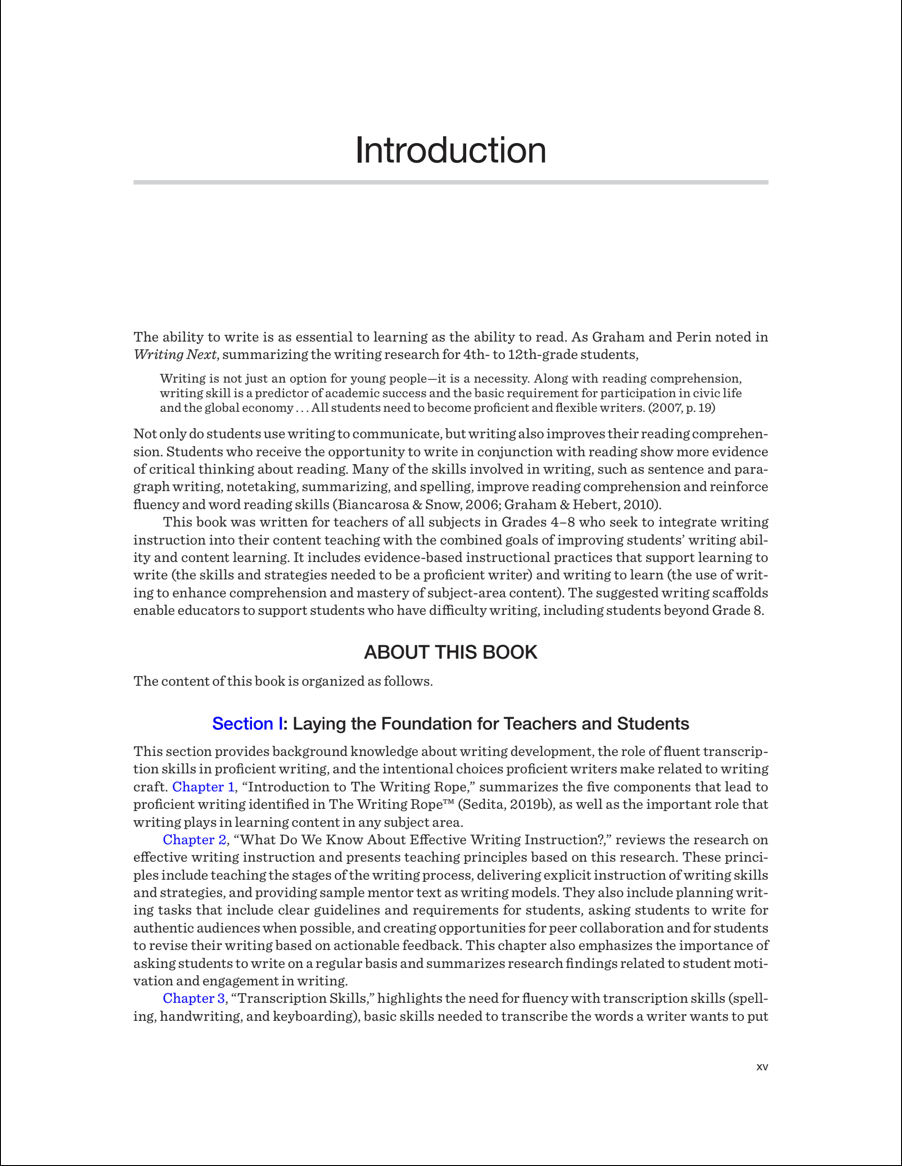
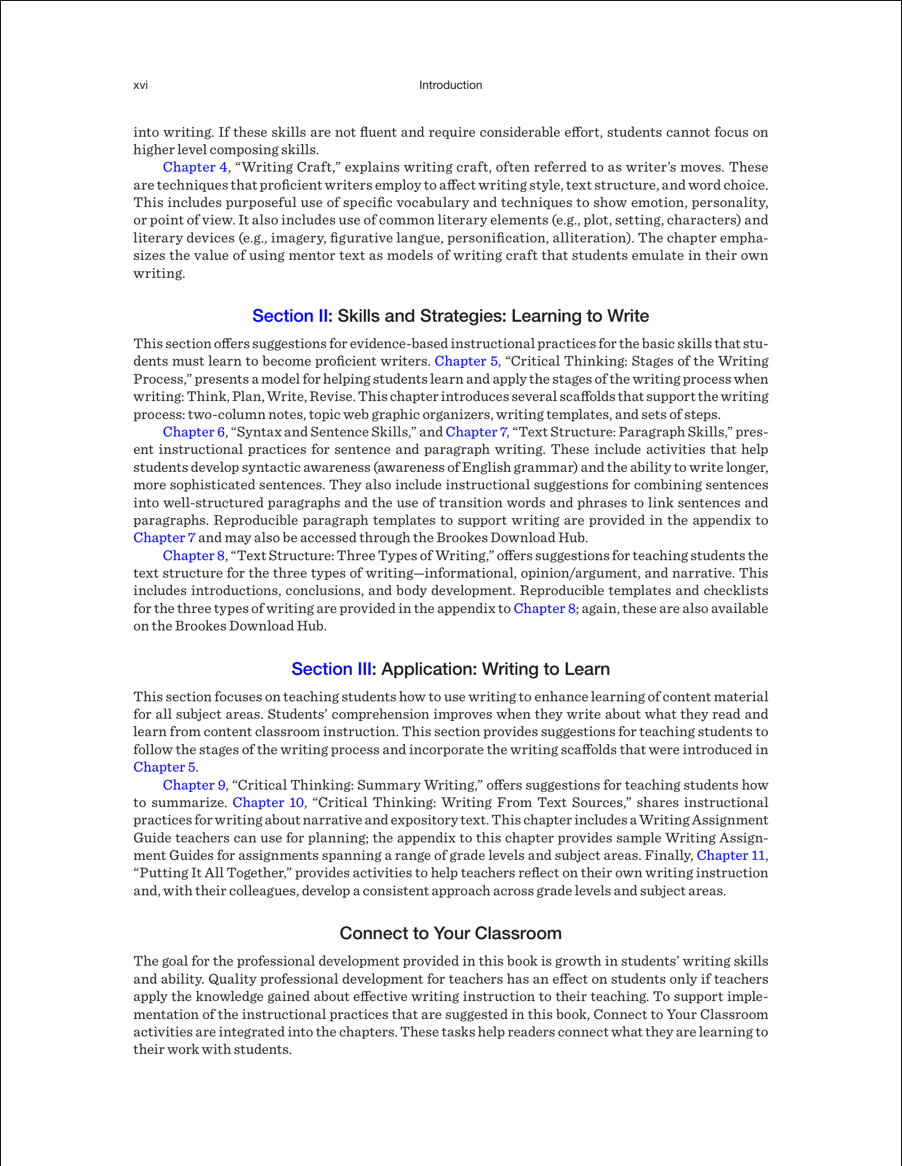
The Writing RopeA Framework For Explicit Writing Instruction In All SubjectsJoan Sedita About the Downloads viiAbout the Author ixForeword Jan Hasbrouck, Ph.D. xiAcknowledgments xiiiIntroduction xvI Laying the Foundation for Teachers and StudentsChapter 1 Introduction to The Writing Rope 3The Writing Rope 3Teaching Writing in All Subject Areas 6Three Types of Content Writing Tasks 8Summary 9Chapter 2 What Do We Know About Effective Writing Instruction? 11Findings From Writing Research 11Writing Is Complex 13Seven Teaching Principles 15Summary 21Chapter 3 Transcription Skills 23Spelling 24Handwriting 25Early Handwriting Instruction 31Summary 32Chapter 4 Writing Craft 33Task, Audience, and Purpose 34Elements of Writing Craft 35More About Using Mentor Text for Writer’s Craft 38Summary 41II Skills and Strategies: Learning to WriteChapter 5 Critical Thinking: Stages of the Writing Process 45Using The Process Writing Routine 46Delivering Explicit Strategy Instruction for Each Stage 47Providing Opportunities for Feedback and Revision 57Summary 58Chapter 6 Syntax and Sentence Skills 59Building Syntactic Awareness 60Teaching Sentence Basics 61Syntactic Awareness and Sentence Elaboration Activities 62Weaving Sentence Skills Into the Writing Process 74Summary 74Chapter 7 Text Structure: Paragraph Skills 77Teaching Paragraph Structure 78Teaching Patterns of Organization 79Weaving Paragraph Skills Into the Writing Process 82Summary 82Chapter 7 Appendix: Paragraph Templates 83Chapter 8 Text Structure: Three Types of Writing 89Suggested Distribution of Writing Types 90Helping Students Craft Introductions 91Helping Students Craft Conclusions 92Teaching Body Organization: Topic Webs to Plan Writing 94Using Mentor Models 95Providing Writing Templates for the Three Types of Writing 98Providing Feedback to Students 98Summary 100Chapter 8 Appendix: Writing Templates and Checklists 101III Application: Writing to LearnChapter 9 Critical Thinking: Summary Writing 113What Is a Summary? 114Summarizing Text 114Seven Ways to Scaffold Instruction 116Summary 123Chapter 10 Critical Thinking: Writing From Text Sources 125Research Support for Writing About Texts 126Related State and National Literacy Standards 127Responding to Narrative Text 128Expository Writing From Sources 129Writing From Sources: Teacher-Generated Prompts 130Explicit Instruction of Skills and Strategies 132Writing From Sources: The Importance of Teacher Planning 147Summary 149Chapter 10 Appendix: Writing Assignment Guide (WAG) Classroom Examples 150Chapter 11 Putting It All Together 161The Big Ideas in This Book 161Reflection Activities for Evaluating Writing Instruction 162A Consistent Approach Across Grades and Subjects 174Appendix Writing Resources for Teachers and Students 179References 219Index 223 |
Unravelling the Complexity of Literacy: A Comprehensive Review of “The Writing Rope” Framework
Introduction: Engineering Success in Comprehensive Writing Instruction
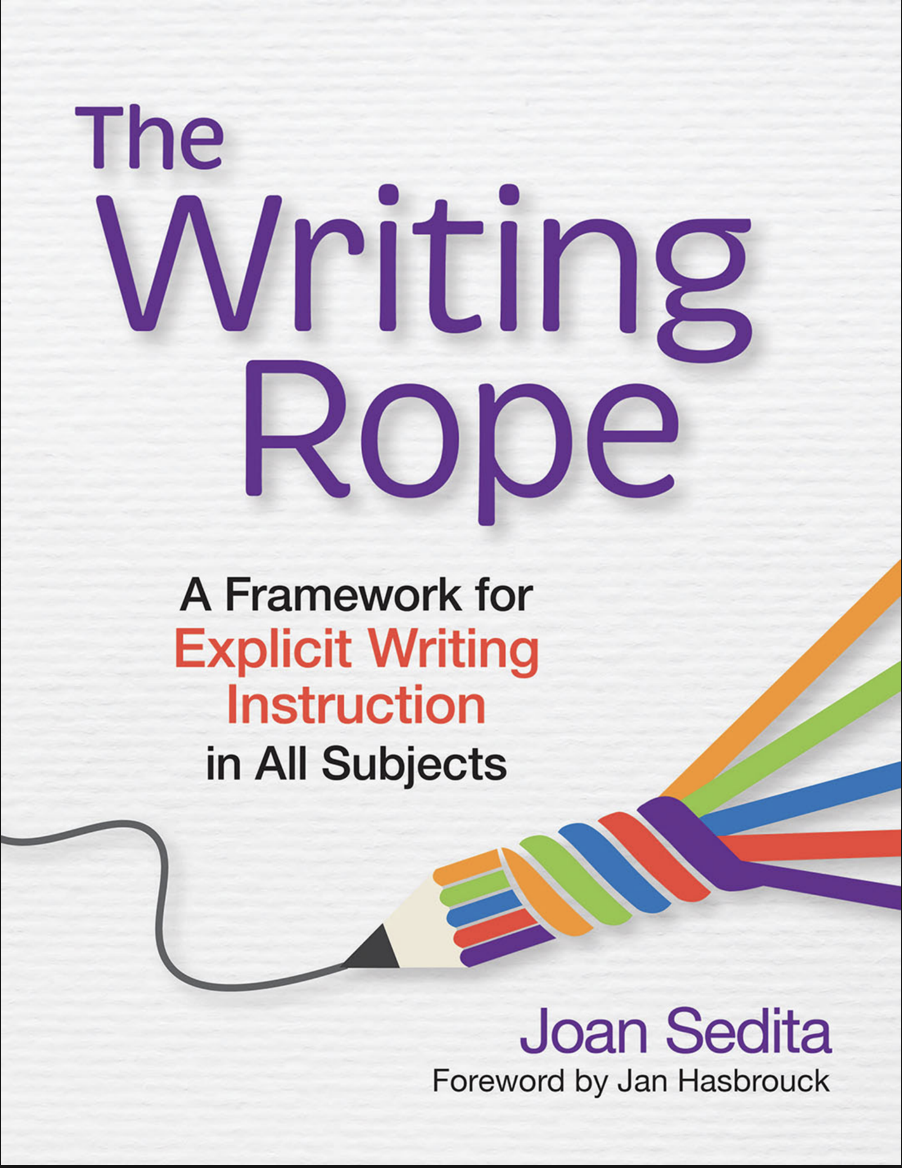
In the landscape of modern education, the transition from basic literacy to sophisticated, multi-disciplinary writing is perhaps the most challenging pedagogical hurdle. “The Writing Rope” by Joan Sedita is a masterfully designed instructional roadmap specifically engineered to guide educators and students through this complexity.
Moving beyond simple prompts and grammar drills, this framework transforms writing instruction into a series of masterable, evidence-based strands that bridge the gap between foundational transcription and high-level critical thinking.
What Kind of Book Is This?
This is a Comprehensive Pedagogical Reference and Strategic Instruction Manual for K-12 educators and literacy specialists. It functions as a multi-disciplinary framework that aligns with the “Science of Reading” to provide a parallel “Science of Writing”.
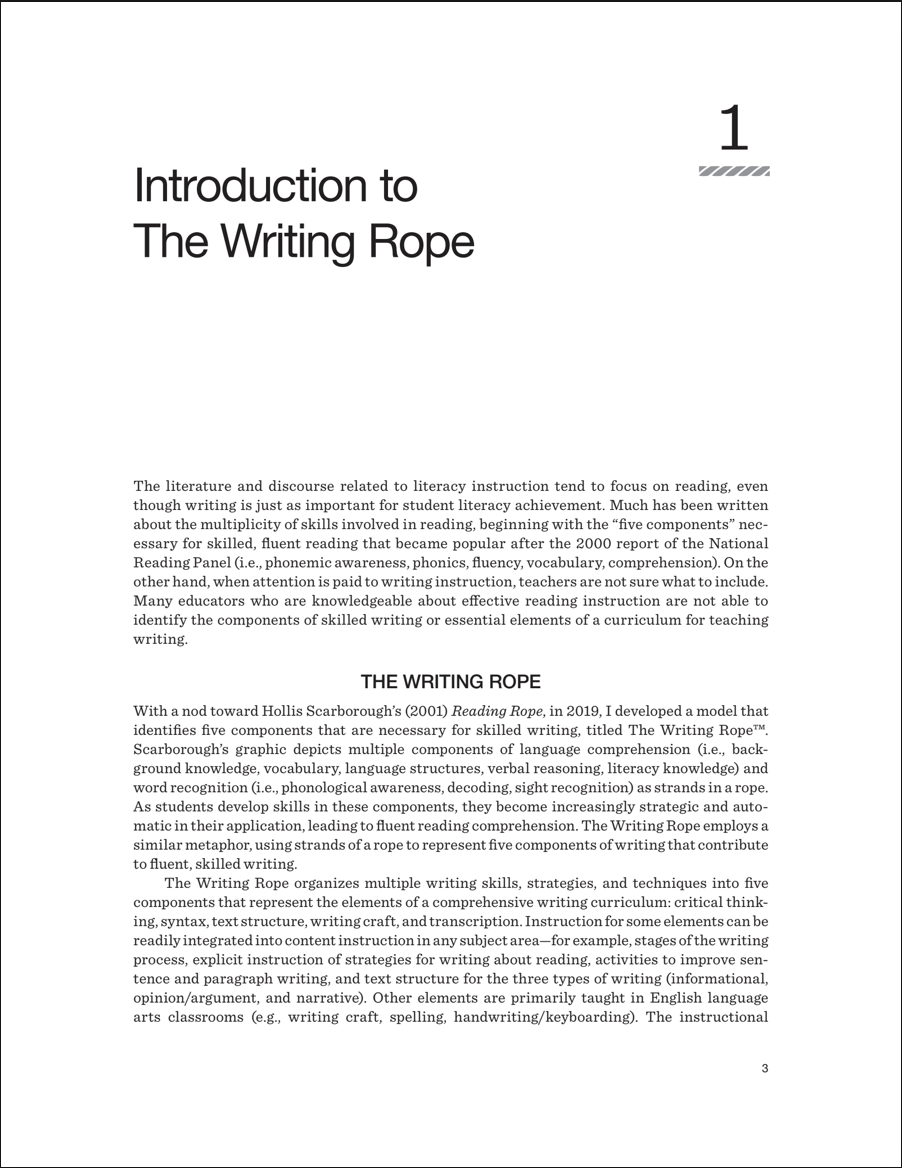
The book follows a logical, modular architecture—organizing instruction into five essential strands: Transcription, Text Structure, Sentence Strategies, Word Craft, and Critical Thinking—ensuring that teachers build a cohesive understanding of how writing functions as the primary vehicle for student learning across all subject areas.
Who Is the Ideal Reader?
- K-12 Classroom Teachers: Educators across all disciplines who need an authoritative, research-based method to teach writing within their specific content area.
- Literacy Coaches and Administrators: Professionals seeking a “plug-and-play” institutional framework to ensure consistent writing instruction across grades.
- Curriculum Developers: Individuals looking for a data-driven blueprint that combines direct strategy instruction with practical templates and checklists.
Detailed Editorial Review: Why This Book Is a Game-Changer
1. Strategic Intellectual Scaffolding (The “Rope” Metaphor)
The standout feature of this manual is its Integrated Semantic Progression. Sedita understands that writing is not a single skill, but a braid of several distinct strands. By isolating “Transcription Skills” (Chapter 3) before masterfully scaffolding up to “Critical Thinking” (Chapters 9-10), the book ensures that educators develop a strong foundational understanding of how to reduce cognitive load for their students.
2. Mastery of Practical and Functional Literacy
Unlike generic theory books, this guide excels in Actionable Accuracy. Chapters on “Syntax and Sentence Skills” and “Paragraph Skills” provide the definitive solution to the “structural gap” often seen in student work. It teaches educators to implement “Sentence Elaboration Activities” and organization patterns, transforming abstract writing goals into essential tools for student agency.
3. The “Writing-to-Learn” Consolidation System
The curriculum is designed with Knowledge Retention at its core. The inclusion of Part III (“Writing to Learn”) is a brilliant pedagogical asset. These modules—focusing on summary writing and writing from text sources—provide the definitive solution to the “learn and forget” cycle, allowing students to use writing as a tool to deepen their comprehension of complex informational texts.
4. Robust Resource and Template Depth
The manual respects the power of Instructional Ready-to-Use Tools. By integrating diverse classroom resources—ranging from “Paragraph Templates” (Chapter 7) to the “Writing Assignment Guide (WAG)” (Chapter 10)—the manual effectively doubles the instructional impact of every lesson. Teachers aren’t just learning “about” writing; they are provided with the mechanics of classroom implementation, which is vital for building a globally confident and literate student voice.
The Final Verdict: Why You Must Read It
Confidence is the foundation of authority in the classroom. For any serious literacy educator, “The Writing Rope” is a journey of 11 strategic leaps toward professional independence and student success; this guide ensures that every one of those leaps is research-backed, measurable, and profoundly practical.
If you are serious about building a literate, curious, and academically successful student body, this series is an indispensable investment.
Conclusion: Rigorous, logically organized, and profoundly practical, this is the gold standard for modern writing instruction. It celebrates the complexity of the written word while maintaining a high standard of academic and research excellence. This guide is your primary resource for achieving true communicative mastery in the classroom.