


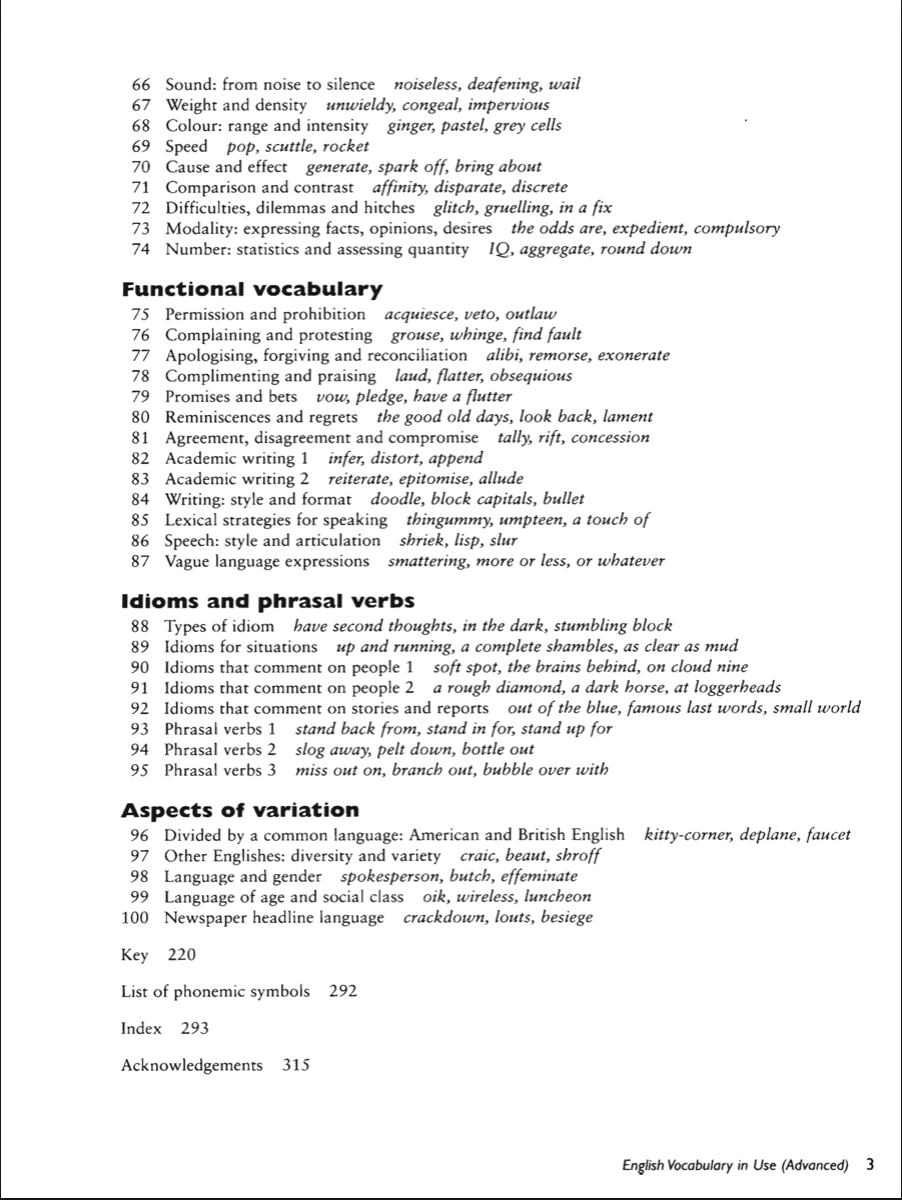


Michael McCarthy Felicity O’Dell To the student ……………………………………………………………………………….. 4 Aspects of vocabulary learningi Strategies for learning ii Types of meaning: polysemy, synonymy, collocation, connotation, register iii Making the most of your dictionary iv Collocation: the real thing, the genuine article v Polysemy: fair, flat, drill vi Metaphor: be on the ball, all the world’s a stage vii Register: garments, clothes, clobber viii Connotation and cultural associations: cowboys, black cats Word formation1 Abbreviations and acronyms: ID, FAQ, o.n.o. 2 Prefixes: creating new meanings: over-, cross-, e- 3 Suffixes: productive suffixes and word classes: -free, -proof, -esque 4 Word-building and word-blending: biodegradable, cybercafé, guesstimate 5 Global contact and language enrichment: loan word, roster, intelligentsia 6 Similar but different: words easily confused: series/serial, moist/damp Work and study7 At work: colleagues and routines: flexi-time, freelance, job-share 8 At work: career and promotion: drive, perks, glass ceiling 9 Business 1: telemarketing, niche market, entrepreneurship 10 Business 2: submit a tender, default on a payment 11 Cramming for success: study and academic work: rote-learning, assignment, deadline 12 Education: debates and issues: elitism, league tables, the three Rs People and relationships13 Talking about yourself: diligent, shrewd, sagacious 14 Relationships: positive aspects: infatuated, amiable, kindred spirits 15 Relationships: problems: disloyal, unsupportive, family feud 16 Passions: reactions and emotions: conciliate, rapture, blissful 17 Feelings: antipathies and aversions: abhorrence, loathing, fickle 18 Observing others: appearance and mannerisms: lanky, grimace, pout 19 Observing others: character traits: impulsive, diffident, gullible 20 Birth and death: from cradle to grave: Caesarean section, obituaries, mourning Leisure and lifestyle21 Free time: relaxation and leisure: time-consuming, dabbler, shopaholic 22 All the rage: clothes and fashion: frumpy, dressed to kill, without frills 23 Homestyles, lifestyles: granny flat, minimalism, household word 24 Socialising and networking: housewarming, hobnob, clique 25 The performance arts: reviews and critiques: hackneyed, typecast, rendition 26 The plastic arts: philistinism, impenetrable, tongue-in-cheek 27 Talking about books: chronicle, memoirs, compulsive reading 28 We are what we eat: wholesome, GM, unsavoury 29 Dinner’s on me: entertaining and eating out: sweet tooth, calorie-conscious, teetotal Travel30 On the road: traffic and driving: hit-and-run, road rage, tailback 31 Travel and accommodation: deluxe, charter, half-board 32 Tourism: back to nature, eco-tourism, discerning The environment33 Describing the world: paddy field, prairies, migrant 34 Weather and climate: clammy, sweltering, snowed under 35 Buildings in metaphors: glass ceiling, tower of strength, key to success 36 Trees, plants and metaphors: nip in the bud, germinate, shrivel 37 Animals and birds: rodent, herbivore, fur trade 38 Environment and conservation: endangered, fossil fuels, pristine Society and institutions39 Here to help: service encounters: obliging, shoddy, on hold 40 Authorities: customs and police: sniffer dog, on-the-spot fine, drug squad 41 World views: ways of thinking: bigot, assumption, tenet 42 Festivals in their cultural context: renewal, commemorate, raucous 43 Talking about languages: Germanic, syntax, pictograms 44 History: usurp power, feudal, serf 45 Poverty: the haves and the have nots: malnutrition, GDP, destitute 46 British politics: lobbyist, petition, grievance 47 The language of law: impeach, embezzle, overturn a verdict 48 War and peace: deterrent, hostilities, biological warfare 49 Economy and finance: debt, sanctions, devaluation 50 Personal finance: balancing your books: strapped for cash, broke, golden handshake The media51 The media: print: agony aunt, flyer, pamphlet 52 The media: Internet and e-mail: chat room, browse, cookie 53 Advertising: rock-bottom prices, state-of-the-art, trailers 54 The news: gathering and delivering: column inch, sound bite, hot off the press Health55 Health and illness 1: go down with, hepatitis, typhoid 56 Health and illness 2: aches and pains, nauseous, acupuncture 57 Health and illness 3: side effects, jaundiced view, prognosis 58 Diet, sport and fitness: cholesterol, cardiovascular, move the goalposts Technology59 Aspects of industrialisation: low-tech, subsidies, lame duck 60 Technology and its impact: PDA, biotechnology, ergonomics 61 Future visions: virtual reality, e-commerce, gene therapy Basic concepts62 Space: expanse and confinement: rambling, poky, labyrinth 63 Time: sequence and duration: donkey’s years, over the hill, fleeting 64 Motion: nuances of pace and movement: hobble, trudge, stream 65 Manner: behaviour and body language: mind your Ps and Qs, etiquette, twitch 66 Sound: from noise to silence: noiseless, deafening, wail 67 Weight and density: unwieldy, congeal, impervious 68 Colour: range and intensity: ginger, pastel, grey cells 69 Speed: pop, scuttle, rocket 70 Cause and effect: generate, spark off, bring about 71 Comparison and contrast: affinity, disparate, discrete 72 Difficulties, dilemmas and hitches: glitch, gruelling, in a fix 73 Modality: expressing facts, opinions, desires: the odds are, expedient, compulsory 74 Number: statistics and assessing quantity: IQ, aggregate, round down Functional vocabulary75 Permission and prohibition: acquiesce, veto, outlaw 76 Complaining and protesting: grouse, whinge, find fault 77 Apologising, forgiving and reconciliation: alibi, remorse, exonerate 78 Complimenting and praising: laud, flatter, obsequious 79 Promises and bets: vow, pledge, have a flutter 80 Reminiscences and regrets: the good old days, look back, lament 81 Agreement, disagreement and compromise: tally, rift, concession 82 Academic writing 1: infer, distort, append 83 Academic writing 2: reiterate, epitomise, allude 84 Writing: style and format: doodle, block capitals, bullet 85 Lexical strategies for speaking: thingummy, umpteen, a touch of 86 Speech: style and articulation: shriek, lisp, slur 87 Vague language expressions: smattering, more or less, or whatever Idioms and phrasal verbs88 Types of idiom: have second thoughts, in the dark, stumbling block 89 Idioms for situations: up and running, a complete shambles, as clear as mud 90 Idioms that comment on people 1: soft spot, the brains behind, on cloud nine 91 Idioms that comment on people 2: a rough diamond, a dark horse, at loggerheads 92 Idioms that comment on stories and reports: out of the blue, famous last words, small world 93 Phrasal verbs 1: stand back from, stand in for, stand up for 94 Phrasal verbs 2: slog away, pelt down, bottle out 95 Phrasal verbs 3: miss out on, branch out, bubble over with Aspects of variation96 Divided by a common language: American and British English: kitty-corner, deplane, faucet 97 Other Englishes: diversity and variety: craic, beaut, shroff 98 Language and gender: spokesperson, butch, effeminate 99 Language of age and social class: oik, wireless, luncheon 100 Newspaper headline language: crackdown, louts, besiege Key …………………………………………………………………………………………………….. 220 List of phonemic symbols ………………………………………………………………………… 292 Index ……………………………………………………………………………………………………. 293 Acknowledgements ………………………………………………………………………………….. 315 |
The Lexical Architect: A Comprehensive Review of English Vocabulary in Use Advanced
Introduction: Bridging the Gap to Near-Native Mastery
For the advanced English learner, the primary obstacle to fluency is no longer grammar—it is lexical precision. The difference between a functional speaker and an authoritative one lies in the ability to use the exact word for the exact context. This book is a rigorous and thematic roadmap designed to help C1 and C2 level learners master the subtle nuances, sophisticated registers, and cultural idioms that define native-level English. Meticulously organized and profoundly practical, it is the definitive guide for anyone serious about achieving true linguistic mastery.
What Kind of Book Is This?
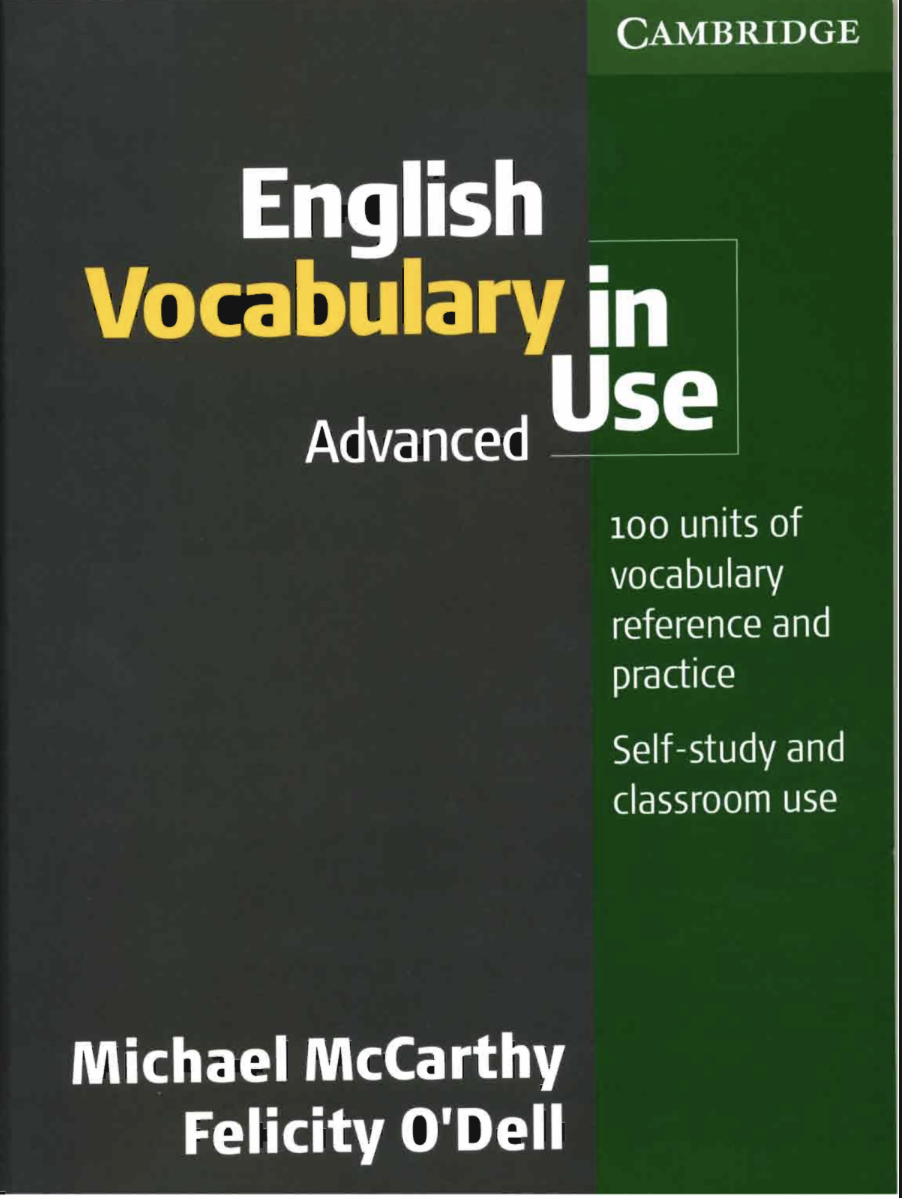
This is a High-Intensity Advanced Vocabulary Reference and Practice manual from the world-renowned English Vocabulary in Useseries by Cambridge University Press. It functions as both an architectural blueprint of the English language and a practical laboratory for word acquisition. Structured into 100 specialized units, it deconstructs language into functional modules—ranging from “Word Formation” and “Basic Concepts” to highly specific fields like “The Environment,” “Technology,” and “Society and Institutions.”
Who Is the Ideal Reader?
This manual is specifically engineered for elite learners who want to polish their communication for high-stakes environments:
- C1-C2 Proficiency Candidates: An essential asset for those preparing for the IELTS (8.0+), TOEFL, or Cambridge C2 Proficiency (CPE) exams.
- International Professionals: Business leaders, lawyers, and academics who need to lead global negotiations or write peer-reviewed journals with total confidence.
- Global Residents: Individuals living or working in English-speaking countries who need to understand the “hidden” logic of news headlines, workplace banter, and social etiquette.
- Self-Driven Scholars: With its built-in “Key” and “Index,” this book is tailor-made for the autonomous learner who wants to self-diagnose and improve their vocabulary range.
Detailed Editorial Review: Why This Book is a Game-Changer
1. Mastering Sophisticated Nuance (Units i-viii)
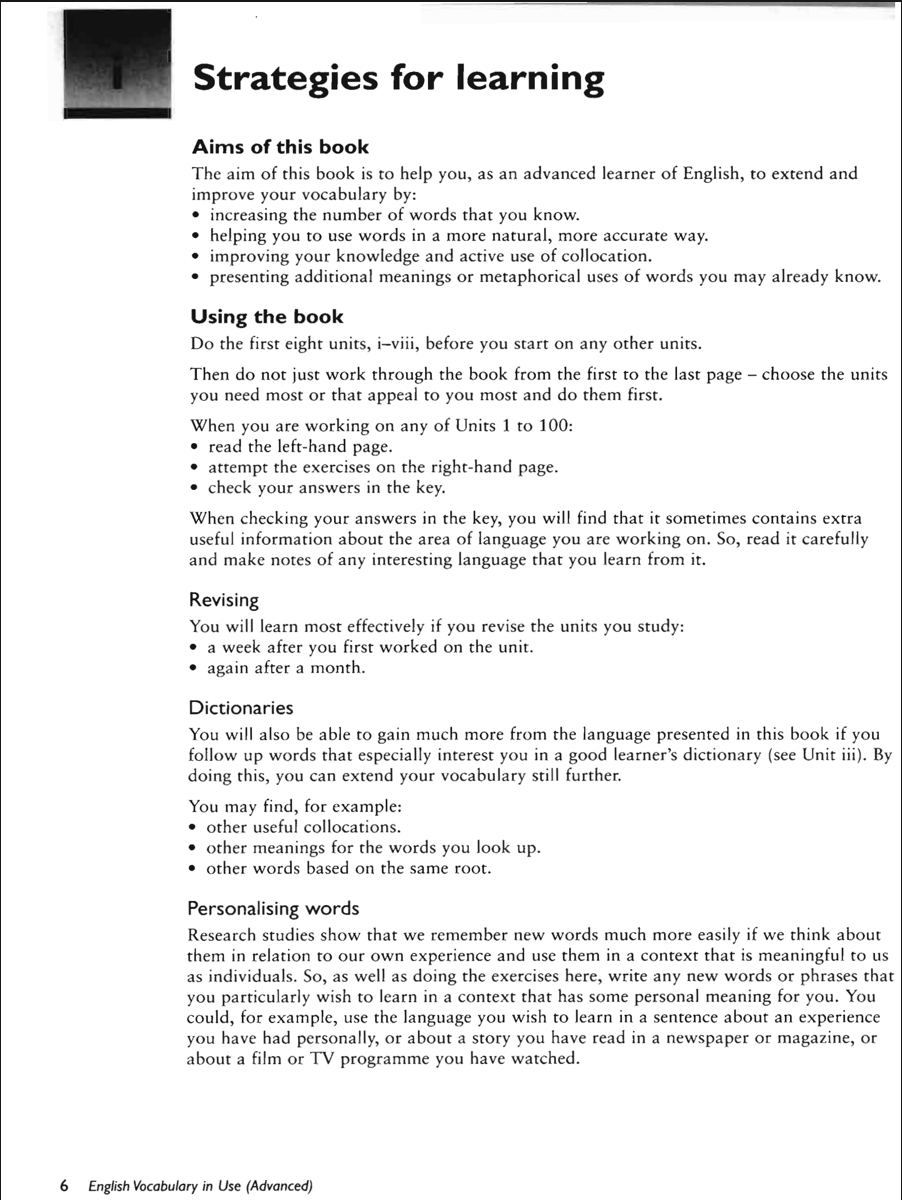
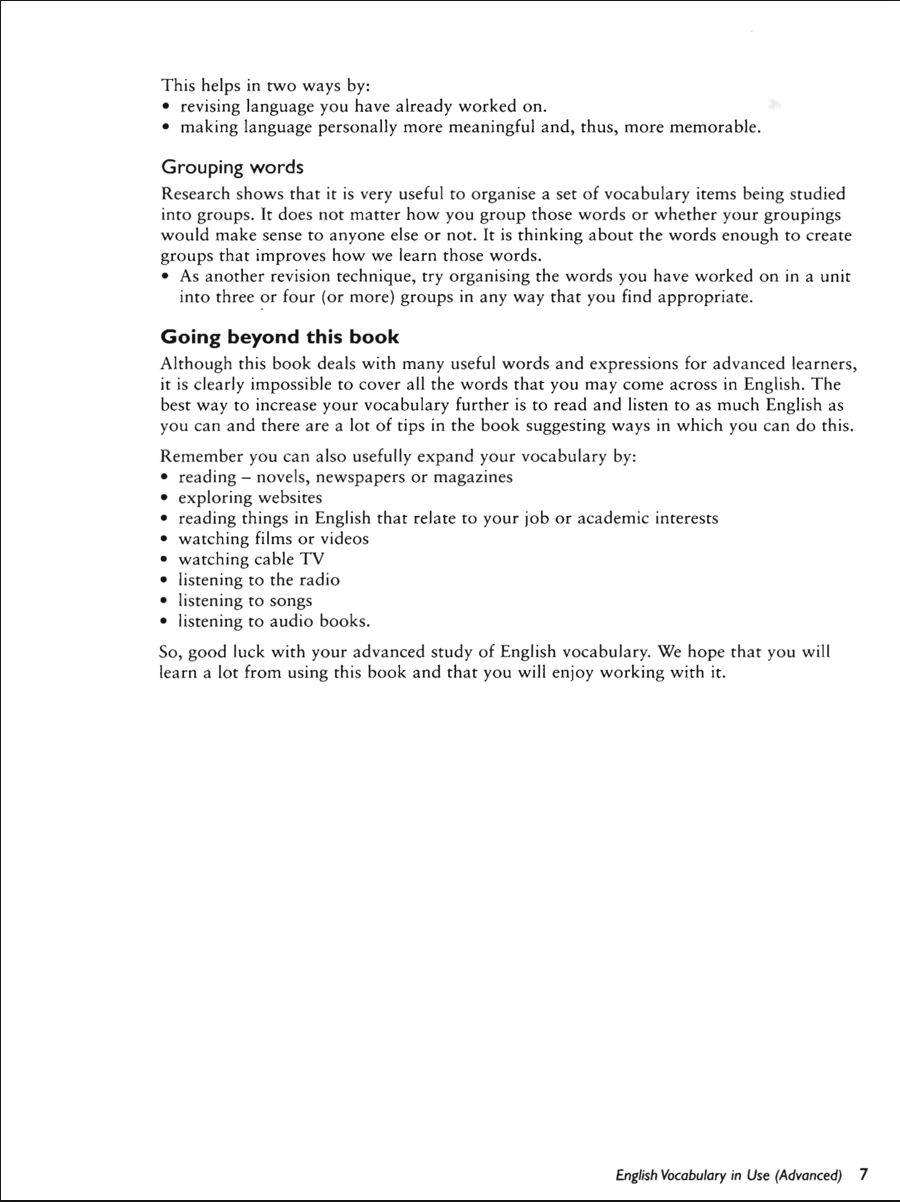
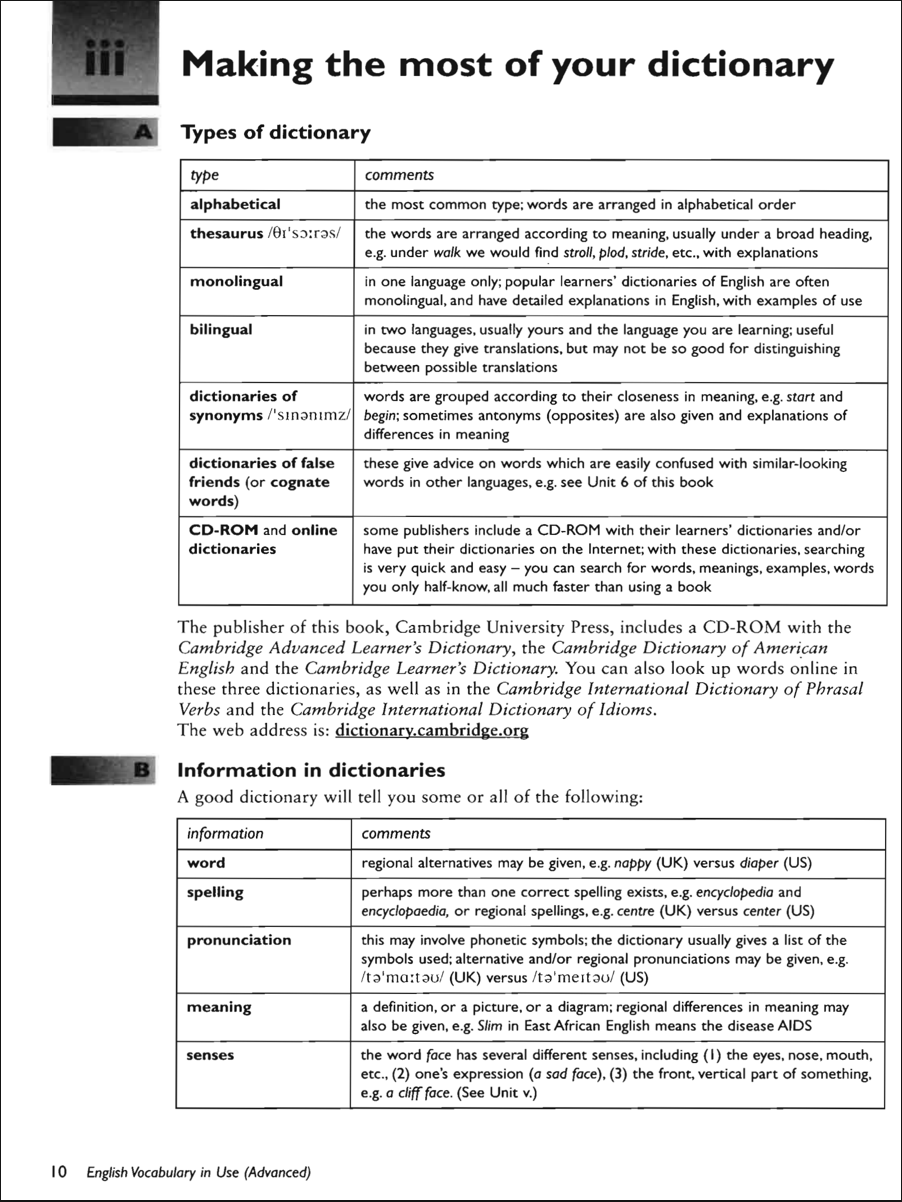
The standout feature of this guide is the “Aspects of vocabulary learning” section. It doesn’t just give you words; it teaches you how to learn. By mastering polysemy, connotation, and register, you gain the “X-ray vision” to understand why a native speaker chooses “clobber” over “garments” or “shrewd” over “diligent.” This focus on style is what separates an advanced student from a master.
2. Tactical Global and Modern Literacy
The subject matter is incredibly contemporary. Dedicated modules on “A changing world” (migration, energy conservation) and “The media” (Internet browsing, advertising trailers) ensure that your vocabulary is calibrated for the 21st-century professional world. It prepares you to discuss everything from “GDP and Malnutrition” to “Biotechnology and Ergonomics” without hesitation.
3. Functional and Idiomatic Command
The sections on Functional Vocabulary (Units 75-87) and Idioms and Phrasal Verbs (Units 88-95) are worth the price of the book alone. You will learn the art of “vague language” for social ease, “academic register” for professional writing, and common idioms like “dark horse” or “cloud nine.” This provides the “social intelligence” required to navigate different cultural environments with absolute confidence.
4. Mastering Linguistic Variation
The final section, Aspects of variation, is a pedagogical masterpiece. It explains the differences between American and British English, regional varieties, and how language shifts according to age, gender, and social class. This prevents the “robotic” feel that many advanced learners struggle with and helps you sound like a culturally aware global citizen.
The Final Verdict: Why You Must Read It
You should read this book because lexical range is the ceiling of your professional and personal potential. In a globalized world, the person with the most precise words is the person who commands the room. This guide provides the tactical training needed to ensure you sound authoritative, natural, and precise in every interaction.
Final Conclusion: Rigorous, logically organized, and incredibly comprehensive, this is the “Gold Standard” for advanced vocabulary development. It transforms the overwhelming complexity of English into 100 masterable, exciting steps. If you are serious about your future in an English-speaking world, this is an indispensable investment.