
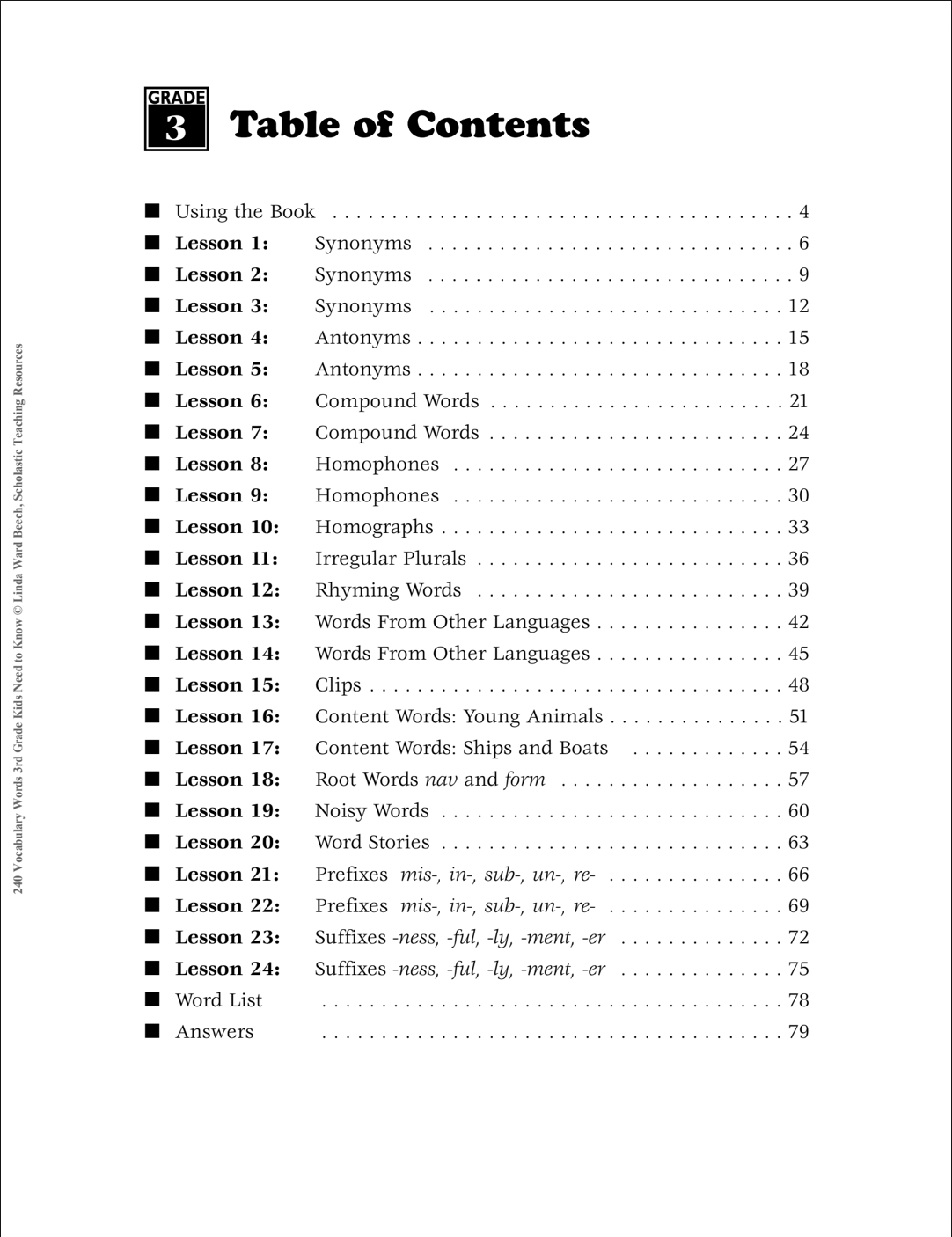

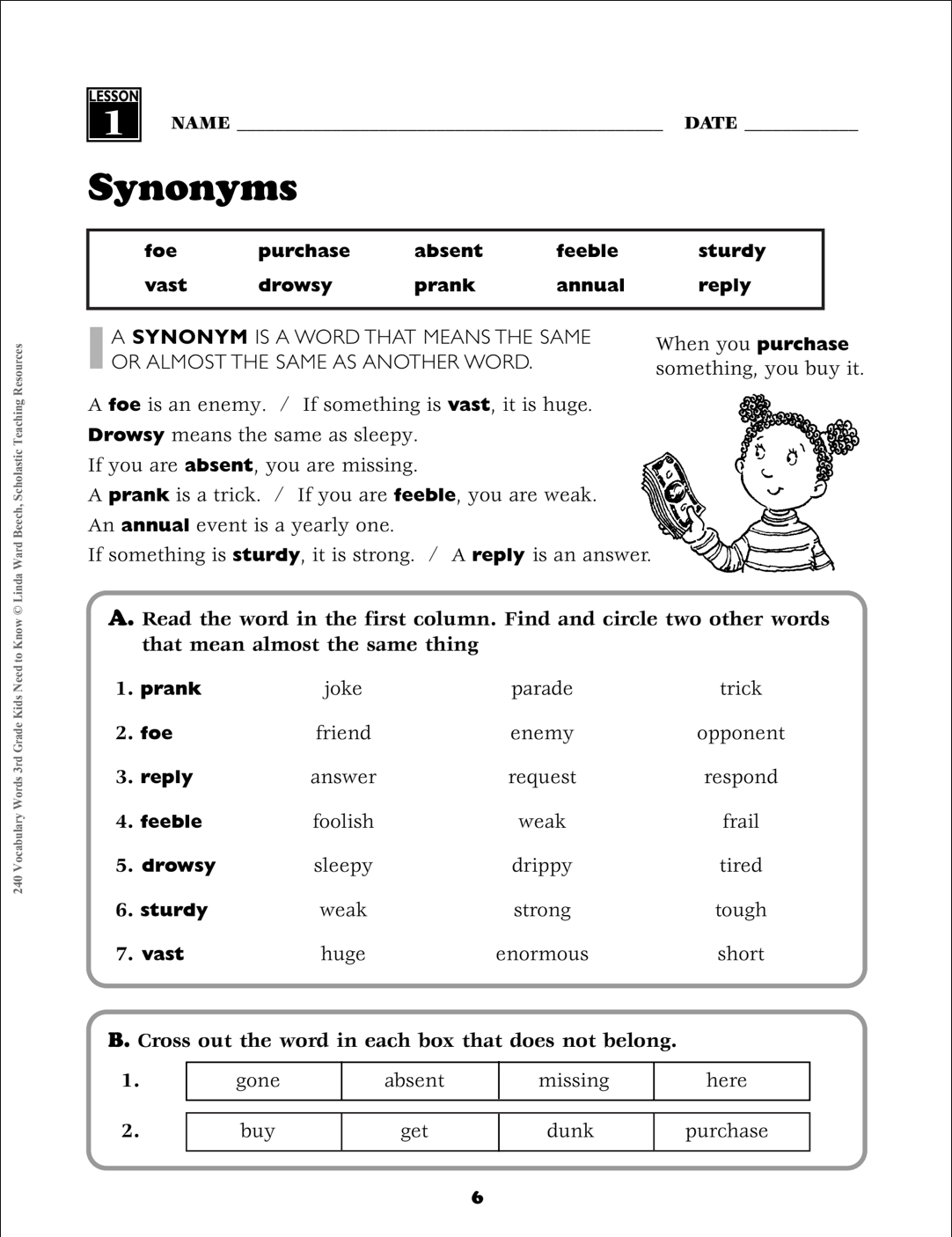

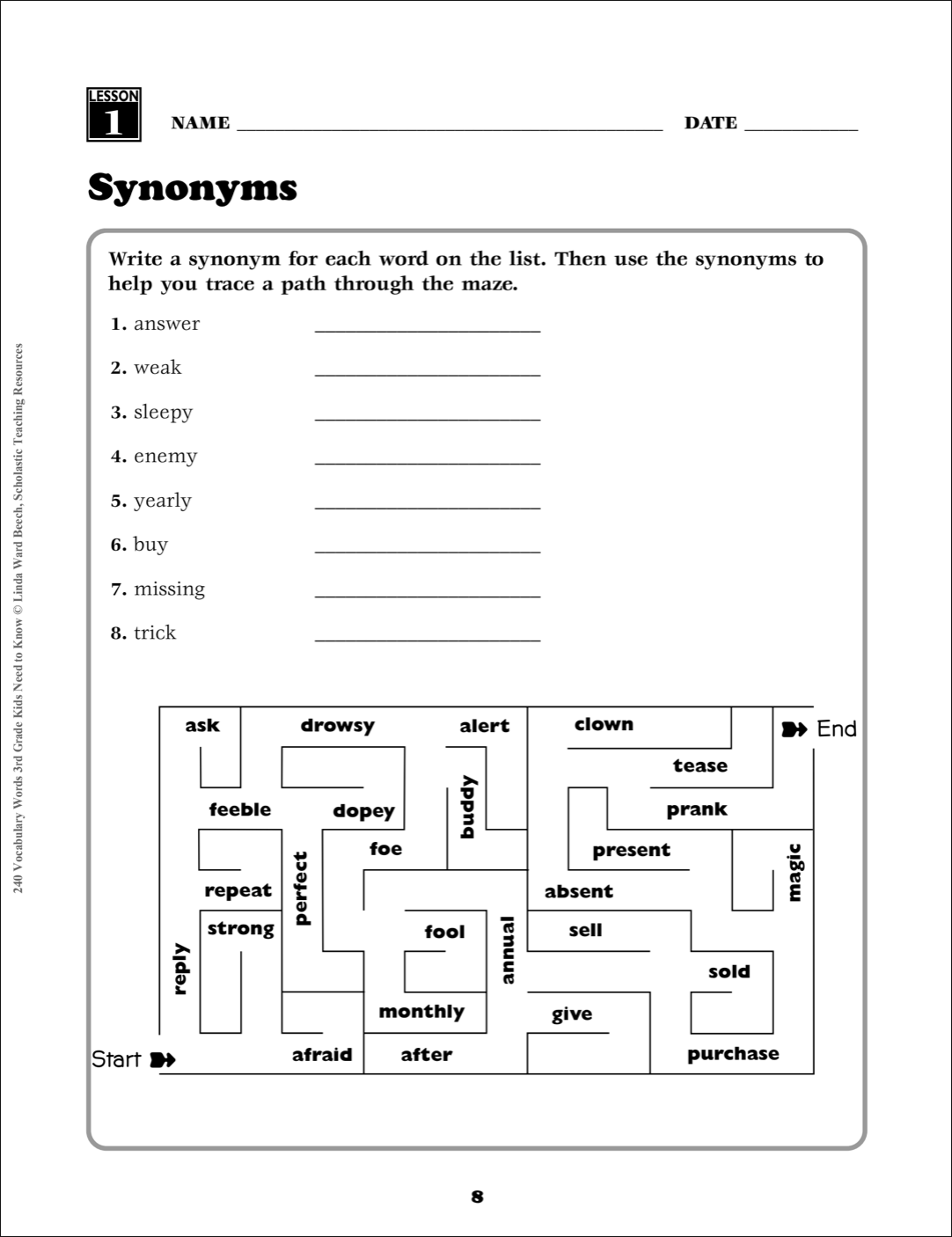
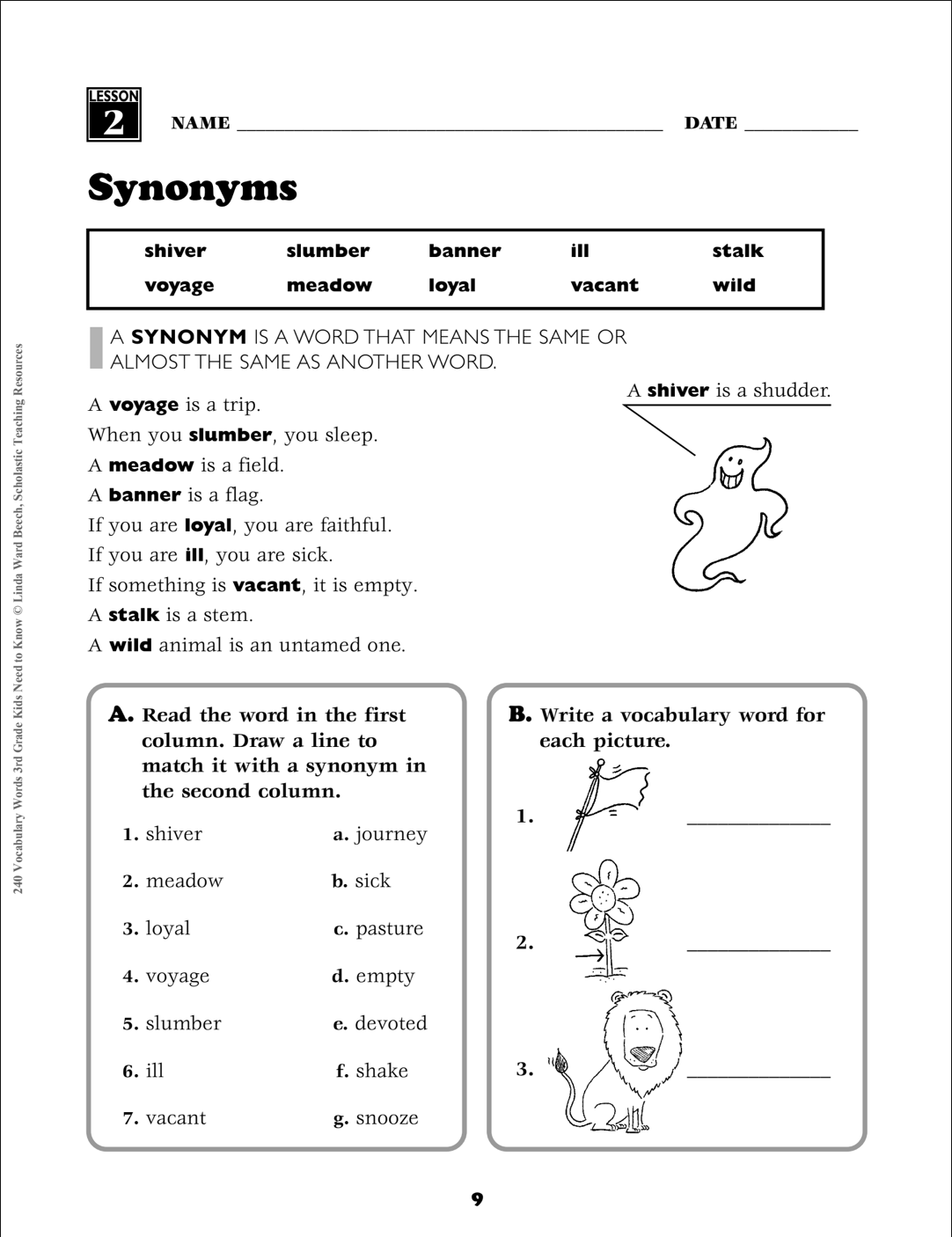

240 Vocabulary Words Kids Need To KnowLinda Ward Beech ■ Using the Book …………………………………………………………………………………… 4 ■ Lesson 1: Synonyms …………………………………………………………………………….. 6 ■ Lesson 2: Synonyms …………………………………………………………………………….. 9 ■ Lesson 3: Synonyms ……………………………………………………………………………. 12 ■ Lesson 4: Antonyms ……………………………………………………………………………. 15 ■ Lesson 5: Antonyms ……………………………………………………………………………. 18 ■ Lesson 6: Compound Words ……………………………………………………………….. 21 ■ Lesson 7: Compound Words ……………………………………………………………….. 24 ■ Lesson 8: Homophones ………………………………………………………………………. 27 ■ Lesson 9: Homophones ………………………………………………………………………. 30 ■ Lesson 10: Homographs …………………………………………………………………….. 33 ■ Lesson 11: Irregular Plurals …………………………………………………………………. 36 ■ Lesson 12: Rhyming Words …………………………………………………………………. 39 ■ Lesson 13: Words From Other Languages ………………………………………………. 42 ■ Lesson 14: Words From Other Languages ………………………………………………. 45 ■ Lesson 15: Clips ………………………………………………………………………………….. 48 ■ Lesson 16: Content Words: Young Animals …………………………………………….. 51 ■ Lesson 17: Content Words: Ships and Boats …………………………………………… 54 ■ Lesson 18: Root Words nav and form ………………………………………………… 57 ■ Lesson 19: Noisy Words ……………………………………………………………………… 60 ■ Lesson 20: Word Stories ……………………………………………………………………… 63 ■ Lesson 21: Prefixes mis-, in-, sub-, un-, re- ……………………………………………. 66 ■ Lesson 22: Prefixes mis-, in-, sub-, un-, re- ……………………………………………. 69 ■ Lesson 23: Suffixes -ness, -ful, -ly, -ment, -er ………………………………………… 72 ■ Lesson 24: Suffixes -ness, -ful, -ly, -ment, -er ………………………………………… 75 ■ Word List ………………………………………………………………………………………………. 78 ■ Answers ………………………………………………………………………………………………… 79 |
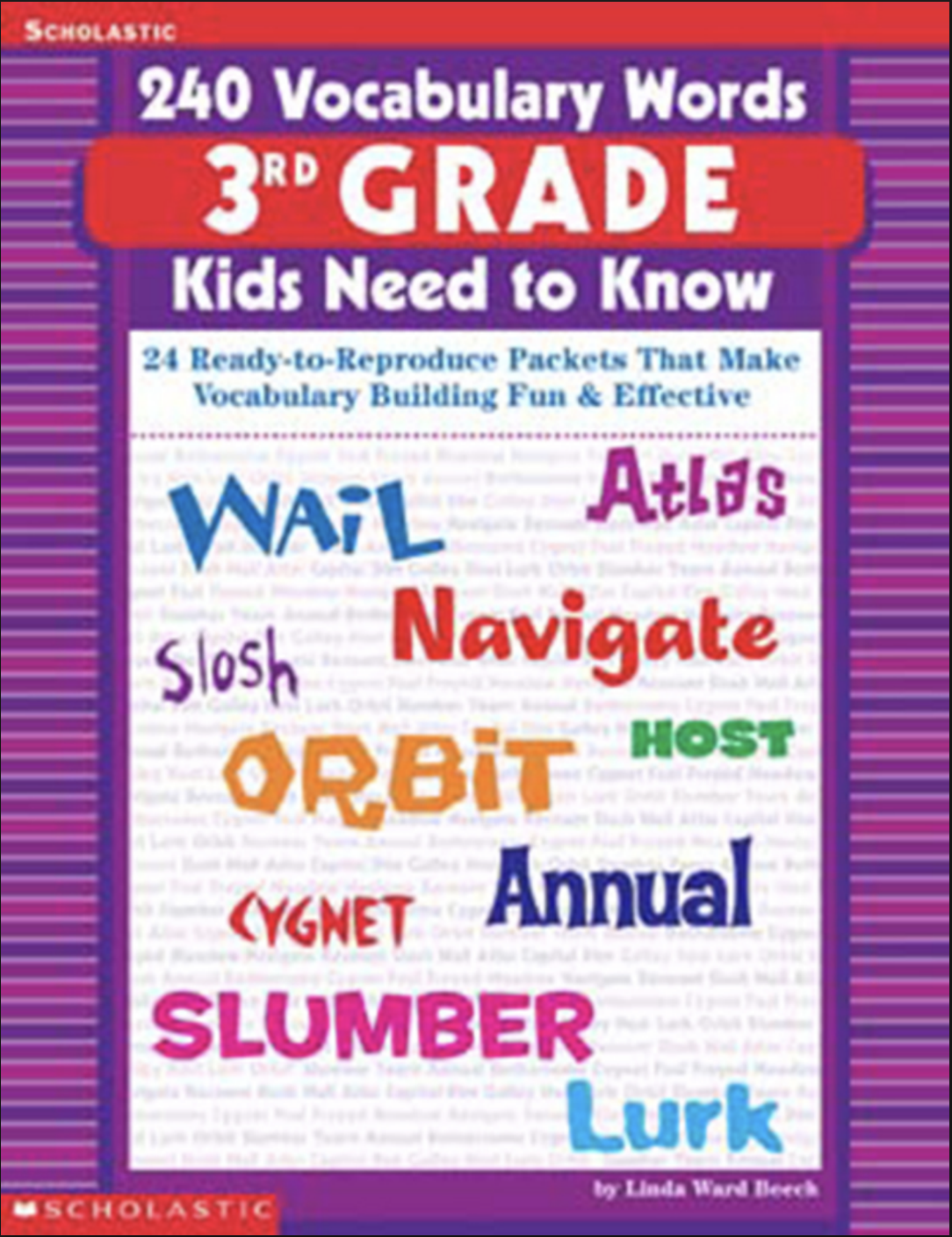
Mastering the Foundations: A Review of the Grade 3 Essential Vocabulary Guide
Introduction: Building a Lifetime of Literacy
Third grade is a pivotal year in a child’s educational journey—it is the transition from “learning to read” to “reading to learn.” At the heart of this transition is vocabulary. This book is a rigorous and systematic roadmap designed to help young learners navigate the complexities of the English language. By focusing on word relationships and mechanics, it empowers students to express themselves with clarity and confidence, laying the groundwork for all future academic success.
What Kind of Book Is This?
This is a Comprehensive Vocabulary Reference and Workbook specifically engineered for 3rd-grade students. It follows a modular, lesson-based architecture that deconstructs the English language into manageable components. From the mechanics of synonyms and antonyms to the sophisticated world of Greek and Latin roots, this guide provides a 360-degree view of how words are built, used, and understood in a real-world context.
Who Is the Ideal Reader?
- 3rd Grade Students: Specifically those looking to strengthen their reading comprehension and writing precision.
- ESL/ELL Learners: Individuals of all ages who need a clear, structured framework to understand the nuances of English word relationships.
- Homeschooling Parents: Those seeking a standardized, evidence-based curriculum that aligns with primary literacy benchmarks.
- Educators: Teachers looking for high-yield, bite-sized lessons to supplement their language arts program.
Detailed Review: Why This Book is a Game-Changer
1. Mastering the Logic of Word Relationships
The standout feature of this guide is its focus on Word Relationships. The early lessons on Synonyms, Antonyms, and Homophones aren’t just about memorization—they are about teaching the logic of the language. By understanding how words relate to one another, students develop the “linguistic flexibility” needed to choose the exact right word for their writing.
2. Exploring Word Mechanics and Etymology
Unlike many primary books, this manual dives into Word Mechanics. Lessons 21 through 24 provide an intensive look at Prefixes and Suffixes, teaching children how to deconstruct long words. Furthermore, Lesson 18 introduces Root Words (nav and form), giving students an early taste of etymology that will serve them well into their high school and college years.
3. Real-World Thematic Units
The inclusion of Content Words (Lessons 16-17) is a pedagogical masterstroke. By teaching vocabulary related to specific themes like “Young Animals” or “Ships and Boats,” the book helps students see how language functions within specific subjects like Science and History. This “interdisciplinary” approach makes the learning feel relevant and exciting.
4. Clear Structure for Independent Learning
The book respects the student’s need for autonomy. With a comprehensive Word List for reference and a clear Answer Key at the back, it allows for immediate feedback. Each lesson is concise and focused, preventing information overload and allowing for a daily “habit of learning” that can be completed in just 15-20 minutes.
The Final Verdict: Why You Must Read It
You should read this book because vocabulary is the engine of communication. You can have great ideas, but without the specific words for “Synonyms” or “Prefixes,” you are limited in how you can express them. This guide provides the tactical, step-by-step training needed to unlock a child’s full potential.
Final Conclusion: Logical, authoritative, and deeply practical, this is the gold standard for primary vocabulary development. It transforms the “chore” of learning words into a series of predictable, masterable steps. If you want to ensure a bright and fluent academic future for a young learner, this book is an indispensable resource.