
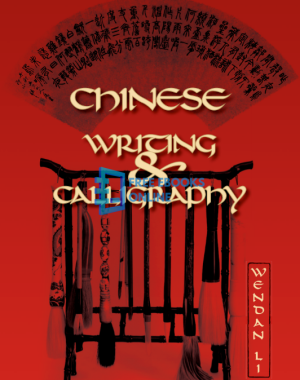



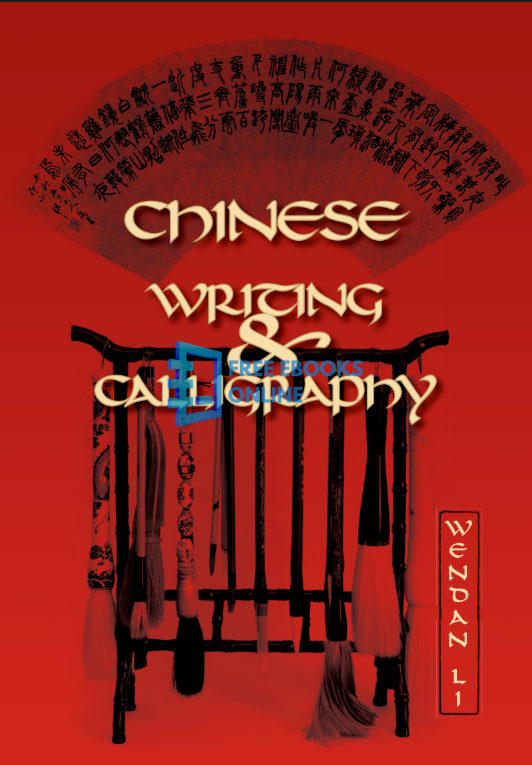
CHINESE WRITING & CALLIGRAPHY
Wendan Li
ix PREFACE
1 CHAPTER 1: INTRODUCTION
2 This Book
3 The Chapters
5 Writing and Calligraphy in Chinese Society
16 The Artistic Qualities of Chinese Writing
18 Abilities That Can Be Acquired by Practicing Calligraphy
19 To Learners with No Background in the Chinese Language
19 Discussion Questions
20 CHAPTER 2: WRITING INSTRUMENTS AND TRAINING PROCEDURES
20 The Four Treasures in a Chinese Study
27 The Training Process
32 Getting Ready to Write
36 Moisture, Pressure, and Speed
37 Discussion Questions and Writing Practice
38 CHAPTER 3: BRUSH TECHNIQUES AND BASIC STROKES I
38 Brush Techniques (1): Pressing Down the Brush and Bringing It Up
40 An Overview of the Major Stroke Types
42 Stroke Type 1: The Dot
45 Stroke Type 2: The Horizontal Line
46 Stroke Type 3: The Vertical Line
47 Tracing
48 Discussion Questions and Writing Practice
50 CHAPTER 4: BRUSH TECHNIQUES AND BASIC STROKES II
50 Brush Techniques (2): Center Tip versus Side Tip
51 Brush Techniques (3): Revealed Tip versus Concealed Tip
52 Stroke Type 4: The Down-Left Slant
54 Stroke Type 5: The Down-Right Slant
55 Stroke Type 6: The Right-Up Tick
56 Chinese Culture (1): Chinese Names
60 Discussion Questions and Writing Practice
61 CHAPTER 5: BASIC STROKES III AND STROKE ORDER
61 Stroke Type 7: The Turn
62 Stroke Type 8: The Hook
65 Summary of Major Stroke Types
66 Suggestions for Beginners to Avoid Common Pitfalls
67 Stroke Order
71 Discussion Questions and Writing Practice
73 CHAPTER 6: THE FORMATION OF CHINESE CHARACTERS
73 The Nature of Chinese Written Signs
75 Categories of Characters
80 The Complexity and Developmental Sequence of the Categories
81 Chinese Culture (2): Dates in Chinese According to the Western Calendar
83 Discussion Questions and Writing Practice
84 CHAPTER 7: THE INTERNAL STRUCTURE OF CHARACTERS AND THE AESTHETICS OF WRITING
84 The Structure of Characters
89 Aesthetic Principles
96 Chinese Culture (3): What Is Written in Chinese Calligraphy?
98 Discussion Questions and Writing Practice
100 CHAPTER 8: THE DEVELOPMENT OF CHINESE CALLIGRAPHY I: THE SEAL SCRIPTS
100 An Overview of Scripts and Styles
102 The Great Seal Scripts
109 The Small Seal Script
114 Discussion Questions and Writing Practice
115 CHAPTER 9: THE DEVELOPMENT OF CHINESE CALLIGRAPHY II: THE CLERICAL SCRIPT
115 The Clerical Script
119 Writing the Clerical Script
123 Chinese Culture (4): The Chinese Traditional Dating Method
128 Discussion Questions and Writing Practice
129 CHAPTER 10: THE DEVELOPMENT OF CHINESE CALLIGRAPHY III: THE REGULAR SCRIPT
129 The Regular Script
130 The Regular and Clerical Scripts Compared
131 Masters of the Regular Script
138 Discussion Questions and Writing Practice
140 CHAPTER 11: THE DEVELOPMENT OF CHINESE CALLIGRAPHY IV: THE RUNNING AND CURSIVE STYLES
141 The Running Style
147 The Cursive Style
152 Writing the Running and Cursive Styles
153 Concluding Remarks on the Development of Chinese Calligraphy
154 Discussion Questions and Writing Practice
155 CHAPTER 12: THE ART OF COMPOSITION
157 Components of a Calligraphy Piece
166 Chinese Culture (5): Chinese Seals
173 Discussion Questions and Writing Practice
175 CHAPTER 13: THE YIN AND YANG OF CHINESE CALLIGRAPHY
175 Diversity in Harmony
178 Dialectics in the Art of Calligraphy
180 Appreciation of Calligraphy
183 Chinese Calligraphy and Health
185 Discussion Questions and Writing Practice
185 CHAPTER 14: BY WAY OF CONCLUSION: CHINESE CALLIGRAPHY IN THE MODERN ERA
186 Modern Developments in Chinese Calligraphy
192 Chinese Calligraphy in the West
195 What Is Chinese Calligraphy?
197 Discussion Questions and Writing Practice
199 APPENDIX 1: BRUSH WRITING EXERCISES
243 APPENDIX 2: PINYIN PRONUNCIATION GUIDE
247 APPENDIX 3: CHINESE DYNASTIC TIMELINE
251 NOTES
255 GLOSSARY (ENGLISH-CHINESE-PINYIN)
259 REFERENCES
263 BOOKS IN ENGLISH FOR FURTHER STUDY
265 INDEX
An Introduction to “Chinese Writing & Calligraphy” by Wendan Li
Chinese Writing & Calligraphy is much more than a simple “how-to” manual; it is a comprehensive, scholarly, yet highly accessible guide to one of the world’s oldest and most revered art forms. Authored by Wendan Li, this book serves as a bridge between the physical act of writing and the deep philosophical roots of Chinese culture. It is designed to take a complete novice from the basic mechanics of holding a brush to a sophisticated understanding of how calligraphy reflects the “Yin and Yang” of the Chinese worldview.
Who Is This Book For?
This book is an ideal resource for a wide range of readers:
- Language Learners: Students of the Chinese language who want to improve their handwriting and understand the structural logic behind complex characters.
- Art Enthusiasts & Practitioners: Those interested in the aesthetic principles of Asian art and looking for a disciplined approach to brushwork.
- Cultural Explorers: Readers with no background in Chinese who want to understand the historical and social significance of calligraphy in China.
- Educators: It is perfectly structured as a textbook for university-level courses in Asian studies or Fine Arts.
Detailed Review: Why This Book Stands Out
1. A Perfect Balance of Theory and Practice
Most books on calligraphy fall into one of two traps: they are either too technical (focusing only on strokes) or too academic (focusing only on history). Wendan Li masterfully avoids both. The book is meticulously structured to provide “Writing Practice” sections at the end of each chapter, ensuring that as you learn about the history of the Seal Script or Clerical Script, you are also physically training your hand to execute those styles.
2. Comprehensive Historical Scope
The book offers a fascinating chronological journey through the evolution of Chinese scripts. You don’t just learn the modern “Regular Script”; you explore the ancient origins of Chinese writing, the development of the Running and Cursive styles, and how these forms have adapted to the modern era. This historical context turns every stroke you practice into a connection with thousands of years of tradition.
3. Deep Cultural Immersion
What makes this book truly special are the “Chinese Culture” sidebars. Li provides essential context on topics such as the “Four Treasures of the Study,” the traditional dating methods, the meaning of Chinese names, and even the health benefits associated with the meditative practice of calligraphy. It teaches you that calligraphy is not just about communication—it is a spiritual exercise and a reflection of one’s character.
4. Pedagogical Excellence
The instructions are clear, the diagrams are helpful, and the progression of difficulty is logical. The inclusion of Appendix 1: Brush Writing Exercises is particularly valuable, providing a structured curriculum that mimics the traditional training a student would receive in a Chinese classroom.
Final Verdict: Why You Should Read It
If you have ever looked at a piece of Chinese calligraphy and felt moved by its beauty but intimidated by its complexity, this book is your way in. “Chinese Writing & Calligraphy” demystifies the art form without stripping away its magic. It is an indispensable resource that proves that learning to write Chinese is not just about memorizing symbols—it is about learning to see the world through a different lens.
Whether you want to master the brush or simply gain a deeper appreciation for Chinese heritage, Wendan Li’s work is a must-have addition to your library.