

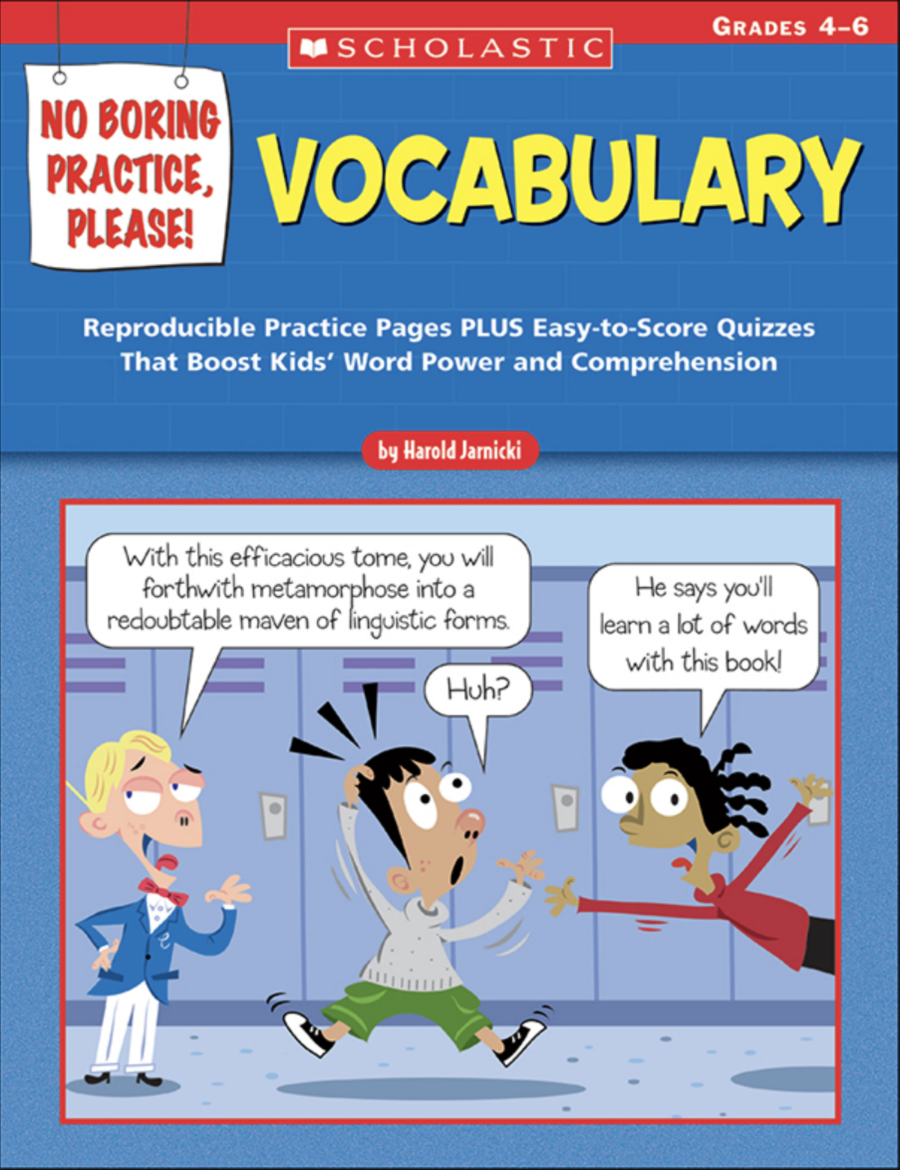


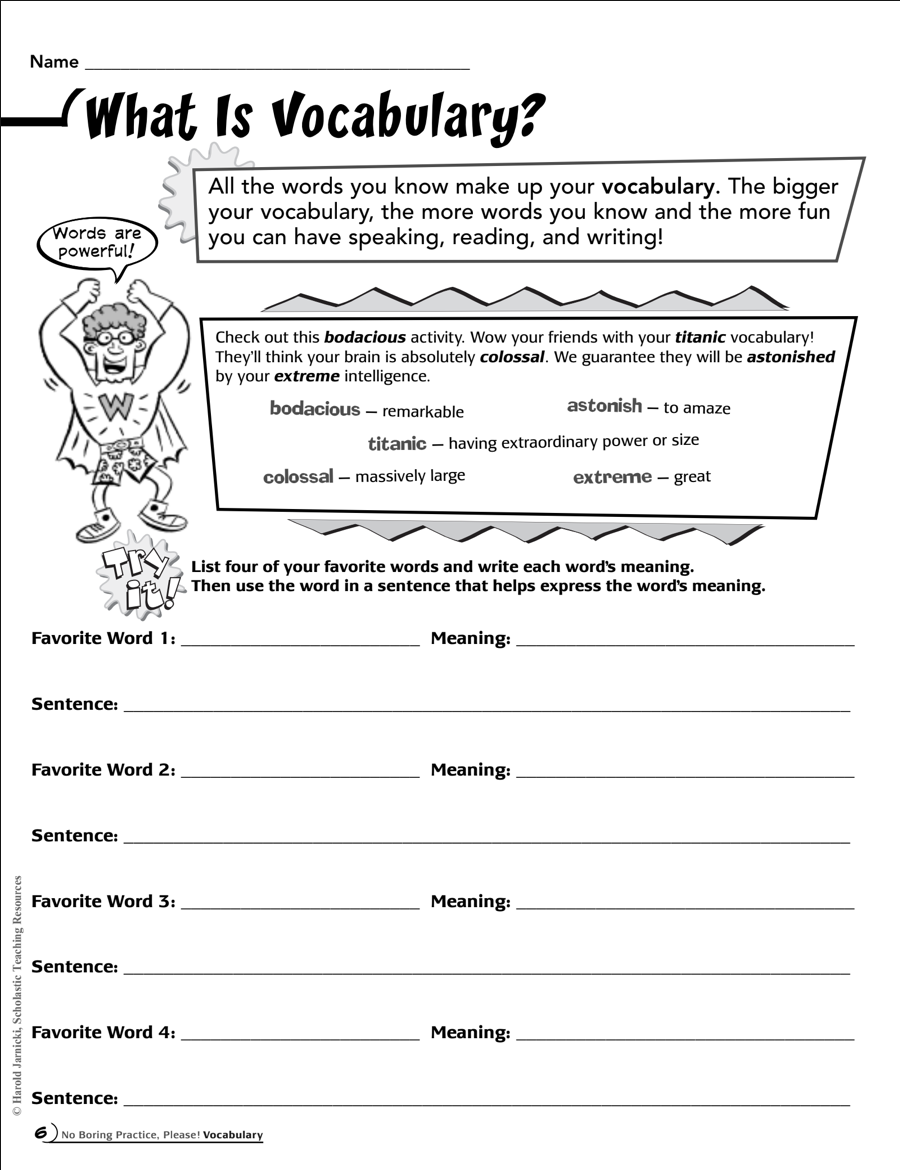

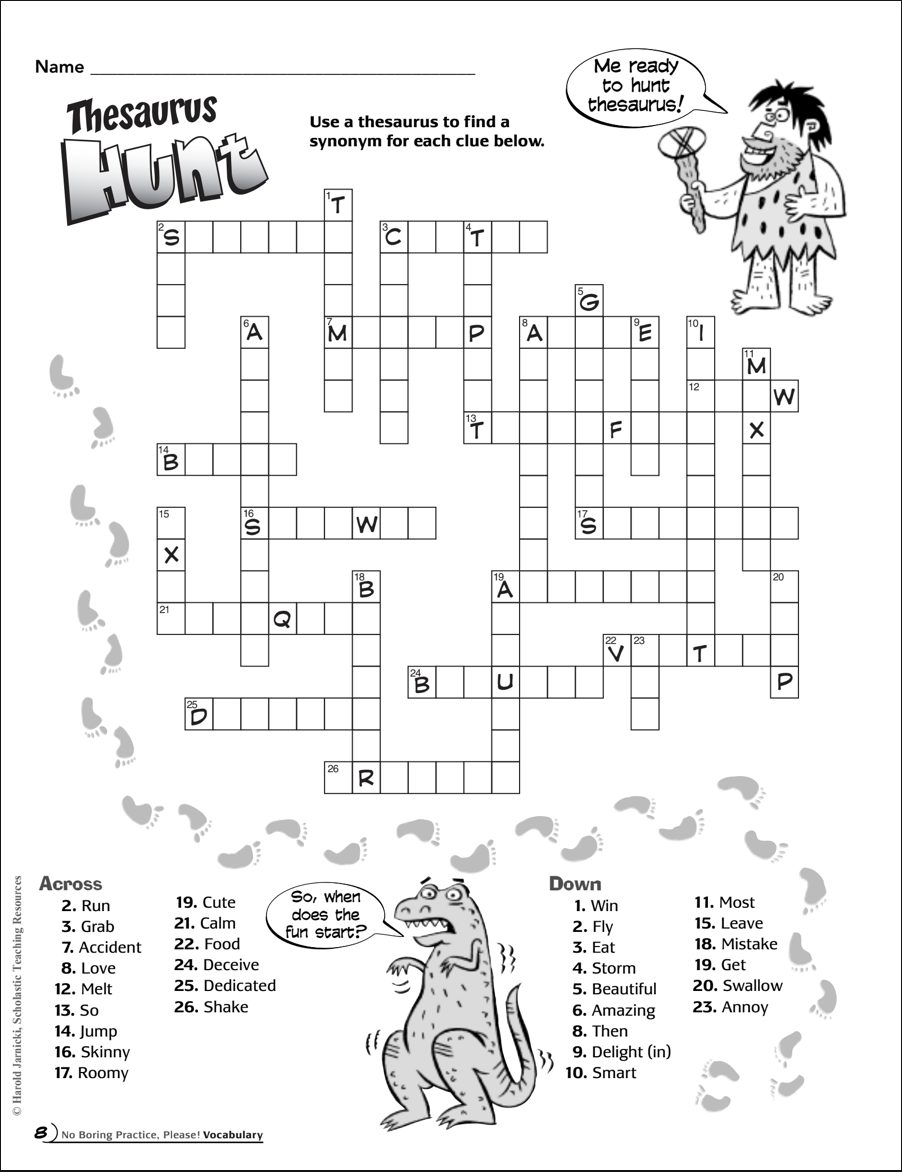


Vocabulary Mastery: Table of ContentsIntroduction ……………………….. 4What Is Vocabulary? …………………. 6Thesaurus Power …………………….. 7Thesaurus Hunt ……………………… 8Presto! The Prefix ………………….. 9Negative Prefixes …………………… 10Positively Negative …………………. 11Extraordinary Prefixes ………………. 12Ultra-Cool X-Word …………………… 13Let’s Get Retro! Prefix Review ……….. 14Quickie Quiz: Prefixes ………………. 16Suffix Rocks! ………………………. 17Suffix Math ………………………… 18X-Word-Ology ……………………….. 20Be a Suffix Sleuth ………………….. 21Let’s Get Retro! Suffix Review ……….. 22Quickie Quiz: Suffixes ………………. 24Eponyms: It’s All in the Name! ……….. 25WOW! Palindromes! …………………… 27What an Oxymoron! …………………… 28Let’s Get Retro! Eponym Review ……….. 29Quickie Quiz: Eponyms & More …………. 30Sound Out Homophones ………………… 31Home in on Homographs ……………….. 33Commonly Confused Words ……………… 34Put It in Context …………………… 35Quickie Quiz: Homophones …………….. 36The Synonym/Antonym Analogy ………….. 38The Relationship Analogy …………….. 39The “Part of” Analogy ……………….. 41Quickie Quiz: Analogies ……………… 43Answer Key …………………………. 45 |
The Word Master’s Handbook: A Comprehensive Review of the Essential Vocabulary and Etymology Guide
Introduction: Unlocking the Architecture of Language
In any professional or academic setting, vocabulary is far more than a collection of words; it is the currency of influence. “The Word Master’s Handbook” is a masterfully designed pedagogical roadmap specifically engineered to help students move beyond simple definitions and into the deep structural logic of the English language.
This book serves as a definitive guide for those looking to build a high-impact lexicon, transforming the challenge of advanced word study into a series of masterable, high-interest milestones.
What Kind of Book Is This?
This is a Structural Vocabulary and Etymology Mastery Manual for middle-to-high school students and advanced language learners. It functions as a multidisciplinary reference guide that deconstructs the “DNA of English”—focusing heavily on prefixes, suffixes, word relationships, and linguistic oddities.
Rather than offering dry lists, the book follows a logical, modular architecture where each lesson builds the “decoding tools” needed to understand complex academic texts.
Who Is the Ideal Reader?
- Academic Students: Those preparing for standardized testing (SAT/ACT) or advanced literature courses where precision in language is non-negotiable.
- English Language Learners (ESL): Individuals seeking an authoritative, evidence-based framework to understand the Latin and Greek origins that dominate professional English.
- Aspiring Writers and Editors: Professionals who need a diverse toolkit to master nuances like homophones, homographs, and oxymorons.
- Educators and Tutors: Teachers looking for a “plug-and-play” curriculum with built-in assessment tools like “Quickie Quizzes” and context-based practice.
Detailed Editorial Review: Why This Book Is a Game-Changer
1. The Mechanics of Word Construction
The standout feature of this manual is its focus on Linguistic Scaffolding. By treating word formation as a logical system—seen in sections like “Suffix Math” and “Presto! The Prefix”—the book ensures that students don’t just memorize words, but learn to assemble them. This approach prevents cognitive burnout and empowers the reader to decipher thousands of words they may have never even seen before.
2. Etymological and Historical Depth
Unlike generic activity books, this guide is built for Deep Learning. The inclusion of sections on “Eponyms” (words named after people) and “Palindromes” provides the cultural capital and historical context that makes vocabulary study exciting. This etymological focus ensures that language is learned as a living, breathing history rather than a static list of definitions.
3. Mastery of Subtle Distinctions
The curriculum excels in addressing the “pain points” of English. By dedicating detailed lessons to “Commonly Confused Words” and “Homographs,” the book provides a definitive solution to the most frequent errors found in modern writing. This “X-ray vision” for subtle differences is what separates a proficient speaker from a true master of the language.
4. Advanced Logical Reasoning through Analogies
The inclusion of “Analogy Adventures” (Pages 38-43) is a brilliant touch. It acknowledges that vocabulary mastery isn’t just about knowing what words mean, but how they relate to one another. By practicing synonym/antonym and part-of-whole relationships, students develop the critical thinking skills required for high-level academic analysis.
The Final Verdict: Why You Must Read It
You should implement this book because clarity is the foundation of authority. For a student or professional, the journey to a master-level vocabulary is built on small, strategic leaps; this guide ensures that every one of those leaps is meaningful, measurable, and intellectually rewarding.
Final Conclusion: Rigorous, logically organized, and profoundly practical, this is the gold standard for advanced vocabulary instruction. It celebrates the joy of discovery while maintaining a high standard of academic excellence. If you are serious about building a professional, persuasive, and sophisticated voice, this book is an indispensable investment.